



Have you noticed that your forehead looks wider than it used to, or that the corners of your hairline have become more pronounced in your 20s or 30s?
It can be difficult to tell whether your hairline is naturally changing as you get older or whether you are experiencing the early stages of hair loss.
Even if you are not shedding much hair, gradual thinning around the hairline can be an early sign of progressive hair loss.
On the other hand, having a high forehead or an M-shaped hairline does not necessarily mean you are losing your hair.
What matters is not just the shape of your hairline, but how it changes over time, whether the surrounding hair is becoming thinner, and whether similar changes are occurring around your crown or parting.
This guide explains the differences between a mature hairline and a receding hairline, the early signs of hair loss in your 20s and 30s, and when medical assessment or treatment may be worth considering.
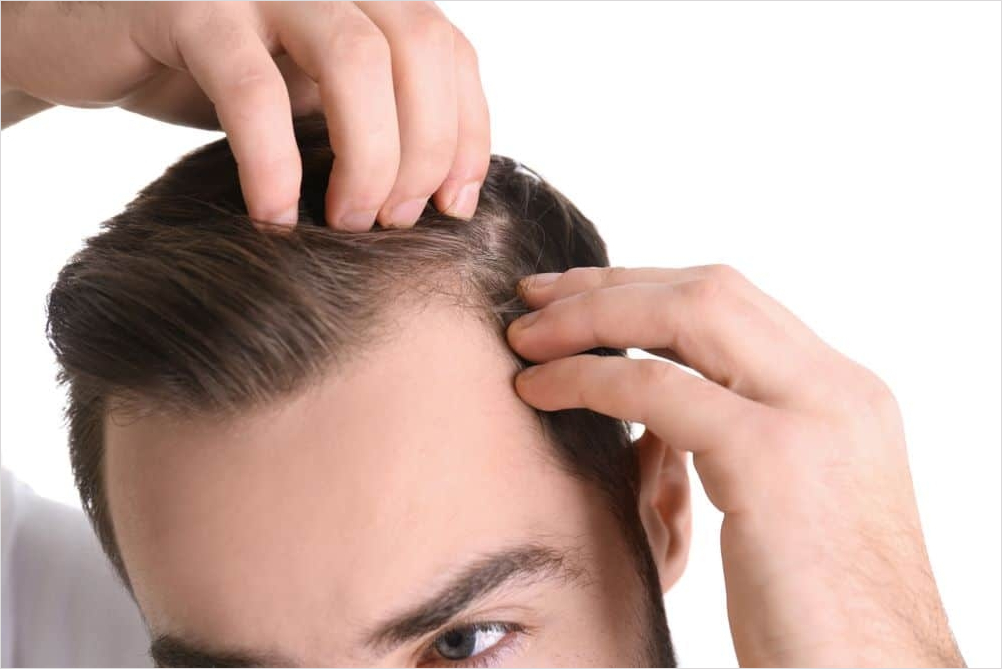

A man's hairline can change between adolescence and adulthood.
A hairline that was relatively low and rounded during the teenage years may gradually become slightly higher, with more defined corners around the temples.
This is commonly described as a mature hairline.
However, a mature hairline is a descriptive term rather than a formal medical diagnosis.
A receding hairline, on the other hand, describes progressive changes in which hair around the forehead and temples becomes thinner or less dense, causing the hairline to move further back over time.
In male pattern hair loss, these changes can be associated with genetic factors and the way hair follicles respond to androgens.
These are general patterns, not definitive diagnostic criteria.
An M-shaped hairline alone may be less important than whether the surrounding hair is progressively becoming thinner and less dense.
It is also possible for age-related hairline changes and early male pattern hair loss to occur together.
When people first become concerned about hair loss, they often focus on how much hair falls out while washing or drying their hair.
However, hair loss does not always begin with sudden or excessive shedding.
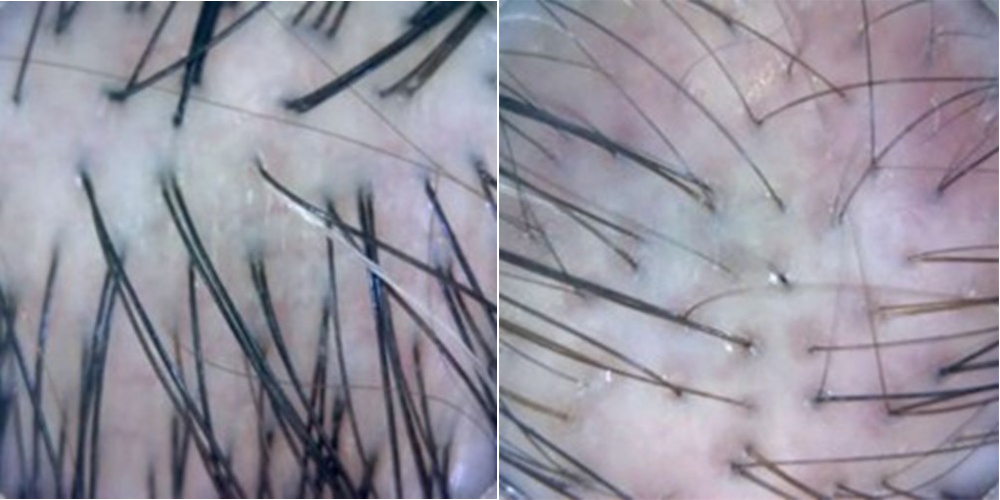
In androgenetic alopecia, commonly known as pattern hair loss, affected follicles may gradually produce thinner and shorter hairs.
This process is called hair follicle miniaturisation.
For this reason, it is important to pay attention to changes in hair thickness and density, rather than focusing only on the number of hairs falling out.
Here are five signs worth checking.
Comparing current photographs with older pictures may reveal that the corners of your hairline have moved further back.
However, the shape or height of your hairline alone cannot confirm hair loss.
Hair that was previously thick may gradually become thinner, particularly around the temples and front hairline.
You might also notice more short, fine hairs in these areas.
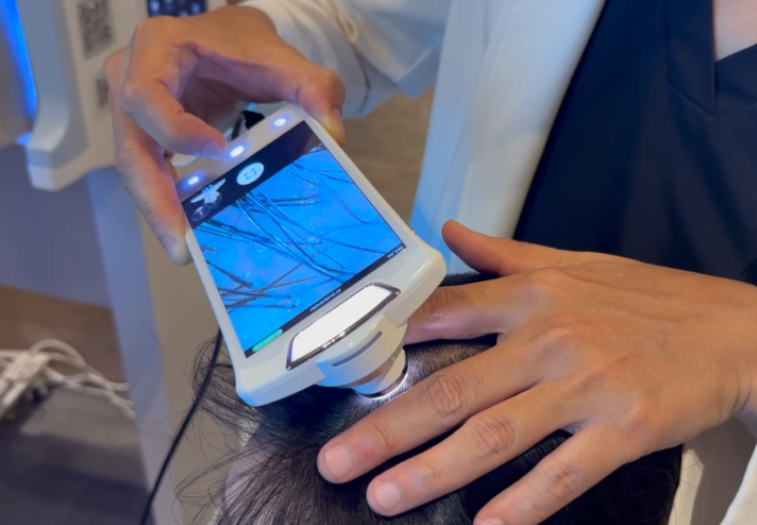
Changes in hair thickness can sometimes be assessed more clearly through a magnified scalp examination than with the naked eye.
If more scalp is becoming visible around your crown, or your parting appears progressively wider, this may indicate reduced hair density.
These changes can occur in both men and women.
You may notice less volume around your forehead or crown even though your hairstyle has not changed.
If your hair length, lighting and styling are similar, it may be worth checking whether the thickness or density of your hair has changed.
Sudden excessive shedding may have causes other than pattern hair loss.
Recent illness, fever, surgery, rapid weight loss or medication changes may be relevant.
Understanding when the shedding began and whether other changes are occurring can help a doctor identify possible causes.
If you are concerned about hair loss, it helps to understand the difference between hair shedding and progressive hair thinning.
Hair naturally grows and sheds as part of its normal growth cycle.
A certain amount of shedding is therefore expected.
Temporary excessive shedding, known as telogen effluvium, can occur after events such as illness, significant physical stress or rapid weight changes.
Pattern hair loss develops differently.
Even without a noticeable increase in daily shedding, affected follicles may gradually become miniaturised, producing finer hairs and reducing overall hair density.
Both conditions can sometimes occur at the same time.
That is why counting the hairs you lose each day, or relying on a single measurement of hair thickness, is not enough to identify the cause.
What matters is when the changes began, which areas are affected and whether the changes are continuing.
Hairline changes and thinning hair can raise many questions, especially when they begin at a relatively young age.
Here are six common questions about the possible causes of early hair loss and when treatment may be appropriate.
Not necessarily.
Even if your parents have thick hair or there is no obvious family history of baldness, inherited hair loss is still possible.
Male pattern hair loss is influenced by multiple genetic factors and how hair follicles respond to androgens.
Family history can be useful information, but it should not be the only factor used to assess your risk.
Your current hair condition and how it changes over time are also important.
Not necessarily.
Even if you do not notice much hair falling out in the shower, gradual thinning around your hairline or crown may indicate early hair loss.
Conversely, sudden heavy shedding does not always mean you have male pattern baldness.
For example, temporary shedding may occur after a significant illness or rapid weight loss.
In some cases, temporary shedding and underlying pattern hair loss can occur together.
When assessing possible hair loss, consider hairline changes, parting width, hair thickness and density — not just the amount of hair being shed.
Getting enough sleep, eating a balanced diet and managing stress are important for overall health.
However, lifestyle improvements alone cannot be relied upon to stop or reverse established genetic hair loss.
It is also important not to assume that one particular lifestyle habit directly causes hair loss or determines how quickly it develops.
Because different types of hair loss require different approaches, persistent changes should be medically assessed to identify the underlying cause.
Supplements may be helpful when a genuine nutritional deficiency is contributing to hair loss.
However, not all hair thinning is caused by poor nutrition.
Taking multiple supplements without identifying a deficiency does not necessarily prevent the progression of genetic hair loss.
During a medical consultation, a doctor may ask about your diet, recent weight changes, medications and other relevant health factors.
Blood tests may be considered if a nutritional deficiency or another medical condition is suspected.
Not everyone needs the same vitamin, iron or hormone tests.
Shampoo can help keep the scalp clean and may be useful for managing certain scalp conditions.
However, ordinary hair loss shampoos do not replace medical treatments aimed at managing follicle miniaturisation in pattern hair loss.
If you are noticing ongoing hairline recession or progressively thinner hair, it may be better to identify the cause rather than relying only on shampoo and waiting for the condition to worsen.
Depending on the diagnosis, medical treatments may be considered.
Not necessarily.
A hair transplant relocates follicles from a donor area, usually at the back or sides of the scalp, to areas where hair density has decreased.
However, a hair transplant does not stop the progression of hair loss in your existing, non-transplanted hair.
For people experiencing early hair loss, the first priority is identifying the cause and considering appropriate treatment, which may include medication.
If a hair transplant is being considered, the current pattern of hair loss, possible future progression, donor condition and required graft count should all be evaluated.
Rushing into surgery without considering future hair loss may lead to a need for additional treatment later.
Managing ongoing hair loss and restoring areas where hair has already been lost are two different goals. Both should be considered as part of a long-term treatment plan.
A photograph of your hairline alone cannot establish the cause of hair loss.
During a medical consultation, a doctor may ask when the changes began, how they have progressed and whether there is a family history of hair loss.
Recent illness, diet, medications and other health factors may also be relevant.
When appropriate, the doctor may examine the scalp and hair under magnification using a technique known as trichoscopy.
This can help assess variations in hair thickness, density and scalp condition.
It may also help identify changes around the front hairline and crown that are difficult to see in ordinary photographs.
If a nutritional deficiency or another medical condition is suspected, blood tests may be considered.
However, not everyone experiencing hair loss requires the same investigations.
For Australian patients who are unsure whether they have progressive hair loss, a GP or dermatologist can be a useful starting point for medical assessment.
Comparing current photos with older photographs can help you understand whether your hairline has changed over time.
However, differences in lighting, camera angle and hairstyle can make your forehead look wider or your hair appear thinner even when little has changed.
For a more useful comparison, try taking photographs under similar conditions.

Gently lift your fringe and take a clear photograph showing the entire front hairline.
Take a photograph from each side so that both temples and the corners of your hairline are visible.
Take a photograph from above to show the crown and how much scalp is visible through the hair.
Wet hair, dry hair, strong overhead lighting and different styling products can significantly change how your hair looks in photographs.
Try to use similar lighting and hair conditions each time.
Regular photographs may help document changes, but photos alone cannot diagnose hair loss.
If you experience rapid hair loss, clearly defined bald patches, scalp pain, inflammation or scarring, seek medical assessment rather than simply monitoring the changes at home.
The most important starting point in hair loss treatment is understanding your current condition and what may be causing it.
When pattern hair loss is diagnosed, a doctor may consider treatments such as minoxidil or finasteride, depending on the patient's individual circumstances.
The appropriate treatment can vary according to sex, age, health conditions, potential side effects and pregnancy-related considerations.
Medication may help slow further hair loss and, in some cases, improve the condition of existing hair.
A hair transplant, on the other hand, is used to restore areas where hair density has significantly decreased or hair has already been lost.
These treatments are not necessarily alternatives to one another.
Medication may still be recommended after a hair transplant to help manage ongoing loss of non-transplanted hair.
For younger patients, particularly those in their 20s, it is important to consider how their hair loss may develop in the future rather than focusing only on restoring the current hairline.
Whether medication alone is appropriate or a hair transplant should be considered depends on the medical assessment.
If you are considering hair transplantation in Korea from Australia, understanding your current hair-loss pattern and likely future progression is an important part of choosing a suitable clinic and treatment plan.
For more information about the process, see our Hair Transplant in Korea from Australia: What to Expect guide.
If your hairline has progressively receded or hair density around your temples has significantly decreased, a hair transplant may be one option for restoring these areas.
However, planning a hair transplant involves more than simply filling in the corners of the hairline.
Facial proportions, your existing hairline, age, the pattern and progression of hair loss, and the amount of healthy donor hair available all need to be considered.
For younger patients in particular, hairline design should take into account the possibility of further hair loss over time.
The number of grafts required also depends on how far the temples have receded, the size of the area to be restored, existing hair density and the desired hairline design.
If you are considering a hair transplant overseas, it is also important to compare the treatment plan and overall cost rather than choosing a clinic based only on its advertised graft price.
Our Hair Transplant Cost in Australia vs Korea guide compares indicative Korean clinic prices with selected published Australian doctor-led prices by graft count.
No. Hairline shape alone cannot confirm hair loss.
It is important to look at whether the temples are continuing to recede and whether the surrounding hair is becoming thinner or less dense.
Yes. Pattern hair loss can begin in early adulthood.
However, not every change in hair thickness or hairline shape during your 20s is caused by genetic hair loss.
It can be.
Progressively finer hair and reduced density around the hairline or crown may indicate early hair loss. However, other causes of hair thinning should also be considered.
Yes. A preliminary consultation may help you understand what information is needed to assess your hair restoration options.
However, determining whether you have hair loss, identifying the cause and deciding on medical treatment require assessment by a qualified medical professional.
Not every hairline change in your 20s or 30s means that you are experiencing hair loss.
However, if your hair is progressively becoming thinner or the density around your hairline or crown is decreasing, it may be worth having the changes assessed rather than assuming they are simply part of getting older.
The goal should not be to try as many hair products as possible or rush into surgery.
It is to understand your current hair condition and identify the most appropriate next step.
If you suspect that you may be experiencing hair loss, consider consulting a GP or dermatologist in Australia for medical assessment.
If you have already been diagnosed with hair loss or are considering hairline restoration, KAN HAIR can help you compare selected specialist hair transplant clinics in Korea.
KAN HAIR is a hair transplant coordination service, not a medical clinic.
We help patients obtain preliminary feedback from partner clinics, compare indicative graft requirements, surgical methods and prices, and arrange consultations and bookings.
If you are exploring hair restoration options, you can send photos of your hairline, thinning areas and donor area through WhatsApp.