



.jpg)
One of the first questions people ask when considering a hair transplant in Korea is: “Will I need to shave my head?”
For patients travelling from Australia, this can be especially important.
Returning to work and everyday life after surgery may make the visibility of donor-area shaving a major consideration.
FUE (Follicular Unit Excision) involves extracting individual follicular units from the donor area.
However, not every FUE hair transplant requires the same shaving pattern.
Selected Korean hair transplant clinics offer three main options:
All three use FUE harvesting, but they differ in how the donor hair is trimmed, the harvesting process, procedure time and cost.
So which method is right for you?
This guide explains the differences, advantages, limitations and pricing considerations to help you understand which option may suit your treatment priorities.

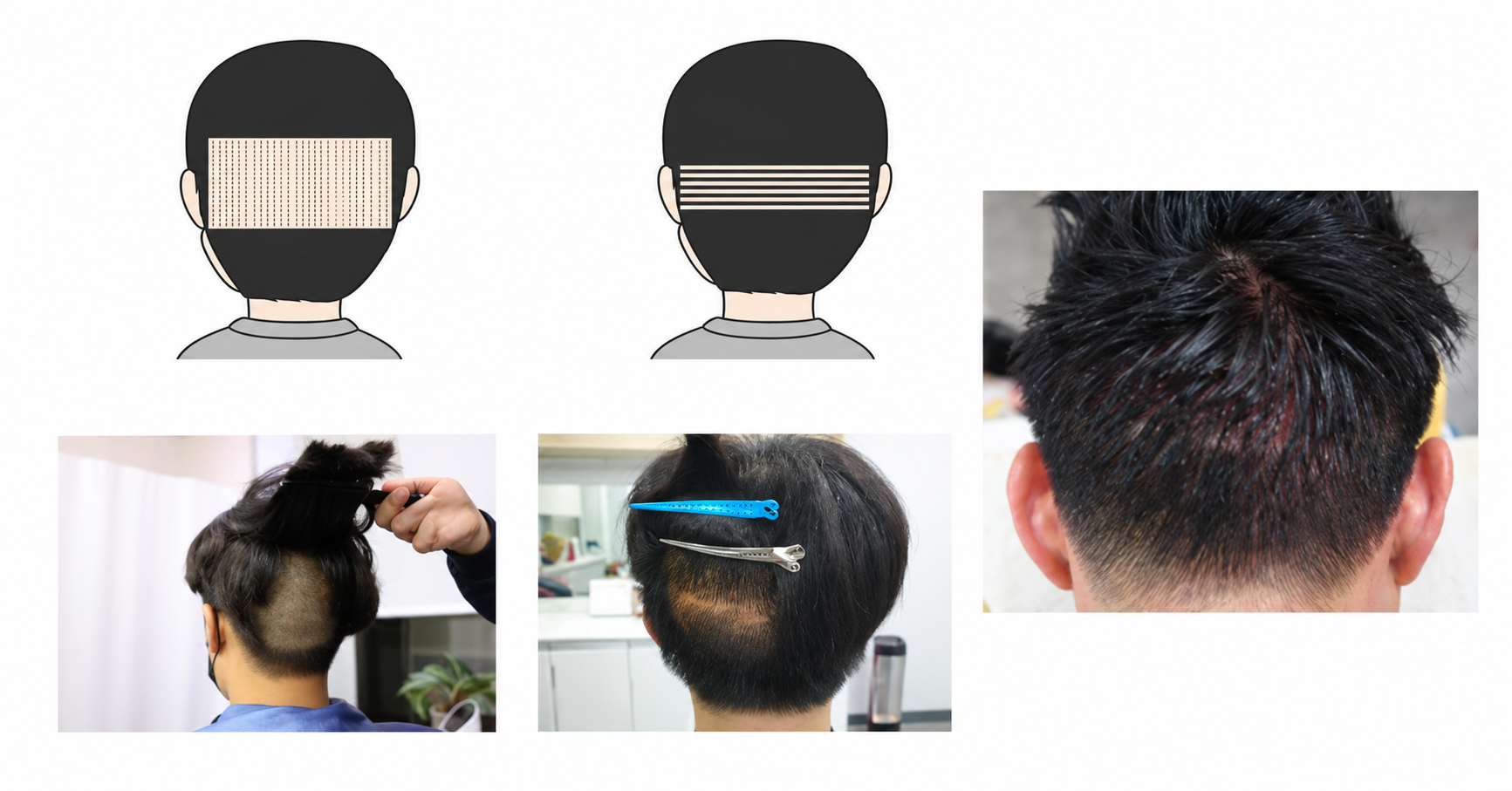

Standard Shaved FUE involves trimming the donor-area hair short before extracting individual follicular units.
By trimming a relatively broad donor area, the surgical team can more easily identify the position and direction of follicles during harvesting.
This method is commonly used for procedures requiring a substantial number of grafts, depending on the patient's donor condition and the clinic's surgical approach.
The main consideration is how the donor area looks immediately after surgery.
If a relatively large section of hair is trimmed short, the shaved area may be noticeable, particularly for patients who normally wear their hair longer.
As the surrounding hair grows, the trimmed area generally becomes less noticeable.
However, FUE can leave small extraction scars regardless of whether the donor hair is shaved.
Standard Shaved FUE may be worth considering if you prioritise cost efficiency, require a larger graft session or are comfortable with visible donor-area trimming after surgery.

Line-Cut FUE is a partial-shave harvesting method in which selected narrow rows or sections of donor hair are trimmed rather than shaving a larger area.
This approach can also be described as a form of Partial-Shave FUE.
If the surrounding hair is long enough, it may cover the trimmed rows after surgery, helping to make the donor area less noticeable.
Line-Cut FUE does not guarantee that the donor area will be completely hidden.
If your hair is short, donor density is low or a large number of grafts is required, the trimmed sections may still be visible.
The number and position of the trimmed rows also depend on the distribution of suitable donor follicles.
For this reason, the suitability of Line-Cut FUE varies according to the clinic, graft requirement and donor condition.
Line-Cut FUE can be a useful middle-ground option for patients who want to reduce visible donor-area shaving without necessarily choosing a fully non-shaven approach.

Non-Shaven FUE refers to harvesting individual follicular units without broadly shaving the donor area.
However, there is an important distinction.
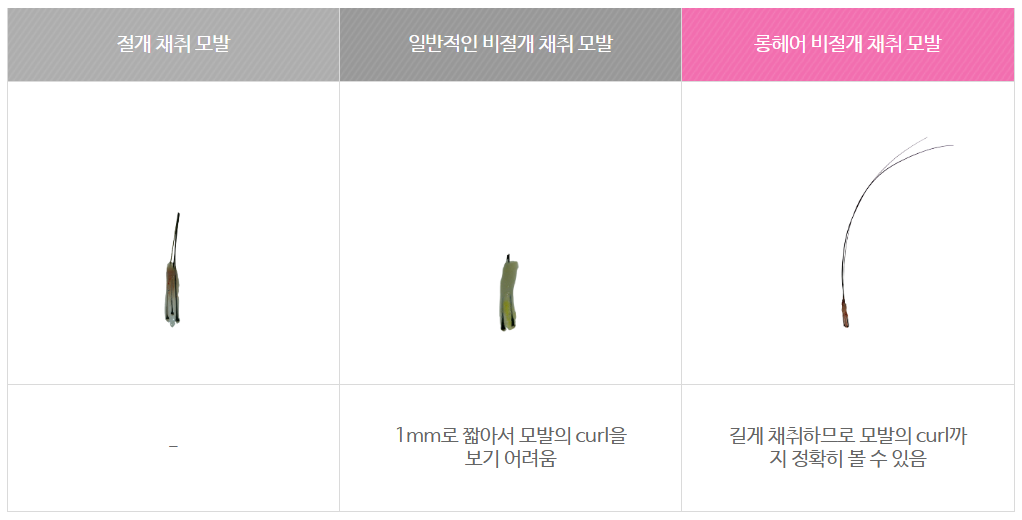
Non-Shaven FUE does not always mean that every graft is extracted with a long hair shaft attached.
Depending on the clinic, the surgeon may selectively trim individual hairs intended for extraction or use a different method designed to preserve the surrounding hairstyle.
Long-Hair FUE, which involves harvesting grafts with longer hair shafts attached, is a more specific technique.
If a clinic offers Non-Shaven FUE, it is therefore important to confirm exactly how the donor follicles will be prepared and extracted.
Harvesting follicles without broadly shaving the surrounding hair can make extraction more technically demanding.
Depending on the clinic and technique, this may increase procedure time and cost. It may also limit the number of grafts that can be harvested in a single session.
Importantly, non-shaven does not mean scar-free or recovery-free.
The donor area still needs time to heal after follicular-unit extraction.
Non-Shaven FUE may suit patients who place a high priority on maintaining their existing hairstyle and are comfortable with the additional costs and procedural considerations involved.
Not exactly.
Non-Shaven FUE is a broader term describing techniques that avoid extensive donor-area shaving.
Long-Hair FUE refers more specifically to harvesting follicular units while retaining longer hair shafts.
When comparing clinics, it is worth asking:
The donor area and recipient area should be considered separately.
A procedure described as non-shaven in the donor area does not automatically mean that the hairline, crown or other recipient area will also remain completely unshaven.
The main difference between Standard Shaved, Line-Cut and Non-Shaven FUE is how the hair is prepared for follicular-unit extraction.
Choosing Non-Shaven FUE does not automatically result in a higher graft survival rate. Similarly, Standard Shaved FUE cannot be considered universally superior simply because the donor area is trimmed.
Hair transplant outcomes depend on several factors, including:
Less shaving does not necessarily mean a better surgical outcome.
A carefully planned procedure that considers the donor condition, graft requirement and long-term hair-loss pattern is more important than the shaving method alone.
The amount of donor-area shaving and the harvesting technique can affect hair transplant pricing.
For example, indicative starting prices from KAN HAIR partner clinics for a 2,000-graft procedure are shown below.
For a more detailed comparison of Australian and Korean procedure prices, see our:
Australia vs Korea Hair Transplant Cost Comparison →
For patients travelling from Australia, donor-area shaving can affect how comfortable they feel returning to work or everyday activities after surgery.
If you need to resume professional or social activities soon after your trip, the appearance of the donor area and how much of your existing hairstyle can be maintained may become important considerations.
However, minimising visible shaving does not eliminate the need for scalp recovery.
Redness, small scabs and donor-area extraction marks may still be visible after surgery, regardless of the shaving technique.
A hair transplant trip to Korea can often be planned around 3 days and 2 nights, although the exact schedule depends on the clinic and procedure.
Before booking flights, confirm:
For more information about planning your trip, read our:
Hair Transplant in Korea from Australia: What to Expect →

Choosing between Standard Shaved, Line-Cut and Non-Shaven FUE involves balancing your preference for minimal visible shaving with the number of grafts that can be safely harvested.
You are comfortable with donor-area trimming, want to prioritise cost efficiency or require a relatively large graft session.
You want to reduce the extent of visible donor shaving and have enough surrounding hair to help conceal the trimmed rows.
Maintaining your existing hairstyle is a major priority and you are willing to consider additional costs or procedural limitations.
Ultimately, the best option should be confirmed after the treating clinic evaluates your donor area and estimated graft requirement.
The most expensive technique is not necessarily the most suitable one.
Not necessarily. In addition to Standard Shaved FUE, selected clinics offer Line-Cut and Non-Shaven FUE options.
Suitability depends on the graft requirement, donor condition and the clinic's harvesting technique.
Line-Cut FUE involves trimming selected narrow sections of donor hair.
Non-Shaven FUE avoids broad donor-area shaving and may use selective trimming or other harvesting approaches, depending on the clinic.
Not necessarily. Less shaving does not automatically improve graft survival.
Outcomes depend on follicle condition, extraction and implantation techniques, surgical planning and individual patient factors.
It can be. Non-Shaven FUE may require more complex harvesting and longer procedure times.
The final cost depends on the clinic, technique and number of grafts required.
Many patients can plan a trip of approximately 3 days and 2 nights, depending on their procedure and clinic arrangements.
However, post-operative care and fitness to travel should be confirmed with the treating clinic before booking return flights.
If you are considering a hair transplant in Korea but are unsure whether Standard Shaved, Line-Cut or Non-Shaven FUE is right for you, the first step is to understand your likely graft requirement and donor condition.
KAN HAIR is a hair transplant coordination service that helps international patients compare selected partner clinics in Korea, available treatment methods and indicative pricing.
Send us photos of your hairline, thinning areas and donor area through WhatsApp.
We can help obtain clinic feedback, estimate a possible graft range and compare suitable Korean clinic options based on your preferences.