Korea vs. Turkey: A Comprehensive Guide to Choosing Your Hair Transplant Destination
May 27, 2026
Autologous hair transplantation has emerged as a premier solution for those seeking a permanent fix to hair loss.
For years, Turkey reigned supreme as the go-to global hotspot for affordable hair restoration.
However, South Korea's medical tourism sector has advanced at a breakneck pace, introducing highly sophisticated techniques specifically tailored to the unique hair and scalp characteristics of East Asians.
In this article, we provide an in-depth comparison of the pros, cons, and distinct medical approaches between Turkey and South Korea to help you make the most informed decision for your hair restoration journey.
Table of Contents
South Korea’s Specialized Approach to East Asian Hair
The Birth of East Asian-Specific Guidelines
In 2016, the Korean Society of Hair Restoration Surgery (KSHRS) published official clinical guidelines designed exclusively for East Asian patients.
Rather than serving as a generic technical manual, this comprehensive framework accounts for the distinct biological traits of East Asian hair and skin, including hair exit angles, follicle thickness, scalp depth, and hyperpigmentation/scarring tendencies.
Key clinical considerations within these guidelines include:
Natural Angular Recreation: Replicating the exact exit angles and directional growth patterns unique to East Asian hairlines.
Depth-Optimized Implantation: Tailoring the depth of micro-slits and implanter pens to match the specific thickness of the East Asian scalp.
Density Strategy: Planning graft placement around the lower average follicle density typical of East Asian scalps compared to Caucasian scalps.
Scar Minimization: Applying specialized surgical steps to prevent the formation of raised scars or keloids.
The implementation of these guidelines has drastically improved the predictability, safety, and patient satisfaction rates across clinics in South Korea.
Turkey Hair Transplants: The Appeal and The Challenges
Turkey has long been celebrated as the global capital of hair transplantation, drawing hundreds of thousands of international patients annually.
Its vast clinical track record, highly competitive pricing, and sheer volume of specialized clinics are undeniably attractive.
However, international patients traveling from East Asia face several logistical and physiological hurdles:
Physical Strain: Enduring a grueling long-haul flight immediately before and after a major surgical procedure.
Circadian Disruption: Managing post-operative recovery while battling severe jet lag and exhaustion.
The Language Barrier: Navigating nuanced aesthetic desires can be difficult without native-level medical translators. A failure to communicate hairline preferences or subtle adjustments can directly jeopardize the aesthetic outcome.
Emergency Responsiveness: Accessing immediate, hands-on medical intervention from your primary surgeon if a complication arises back home.
Post-Op Commute: Traveling back across continents for routine follow-ups or scalp evaluations is highly impractical.
Anatomical Generalization: Many high-volume clinics in Turkey operate primarily on Caucasian hair profiles, which behave quite differently from coarser, straight East Asian hair follicles.
The Technological Evolution of Korean Hair Restoration
Following the standardization of East Asian-specific guidelines, South Korea's medical field rapidly integrated premium technology with cosmetic artistry:
Methodological Standardization: Calibrating extraction and implantation speeds to protect the fragile outer root sheath of coarser hair.
State-of-the-Art Medical Devices: Incorporating the latest micro-punches and specialized implanter pens (Choi implanters) to reduce donor and recipient site trauma.
Rigorous Clinical Training: Continuous peer reviews and extensive case studies within highly competitive medical circles.
Synergy with Plastic Surgery: Merging hair restoration with South Korea’s world-renowned facial contouring and aesthetic design principles.
Key Advantages of Choosing South Korea
For patients residing in or near Asia, South Korea offers distinct advantages that extend beyond geographic proximity:
Minimal Travel Fatigue: Short, accessible flights that prevent unnecessary physical stress on the body.
No Jet Lag: Operating on virtually the same timeline allows for stable, restful post-operative recovery.
Flawless Communication: Top-tier clinics provide dedicated native-level or certified medical translators to ensure no detail is lost in translation.
Seamless Continuum of Care: Structured domestic or digital follow-up networks for post-transplant monitoring.
Aesthetic Familiarity: Surgeons who inherently understand the facial proportions and hairline trends suited for East Asian features.
Core Surgical Methodologies
Regardless of the country you choose, hair transplants are fundamentally executed via two primary harvesting techniques, both of which have been highly customized in Korea:
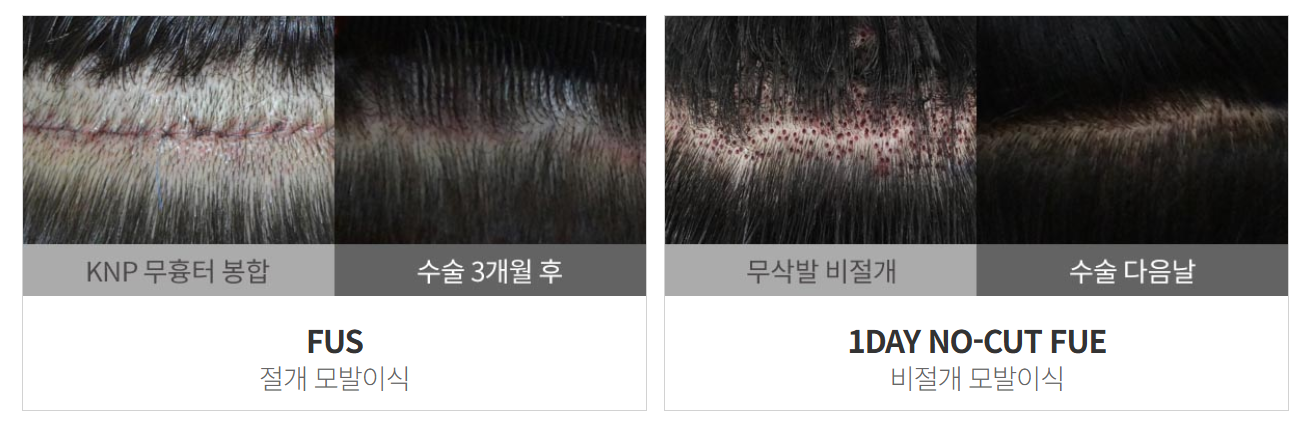
1. Follicular Unit Transplantation (FUT / Strip Method)
This technique involves removing a narrow, superficial strip of tissue from the permanent donor zone at the back of the head, which is then dissected into individual grafts under high-powered microscopes.
Pros: Ideal for maximizing graft yield in a single session; higher survival rates for certain tissue types.
Cons: Leaves a linear scar across the donor area, requiring longer hair to conceal.
2. Follicular Unit Extraction (FUE)
This method involves extracting individual follicular units directly from the scalp one by one using a specialized micro-punch tool.
Pros: Minimally invasive, leaves tiny dot-like scars that are virtually invisible even with short hairstyles.
Cons: More time-consuming; can limit the total number of grafts safely harvestable in one sitting depending on donor density.
Post-Operative Timeline and Milestones
A successful hair transplant requires patience, as the healing and growth process unfolds over four distinct phases:
Phase 1: Immediate Post-Op
Timeline: Days 1 to 14
What to Expect and Post-Op Guidelines: Minor swelling, redness, and mild tenderness. Strict shampooing protocols and contact restrictions apply to protect fragile grafts.
Phase 2: Shock Loss
Timeline: Weeks 2 to 8
What to Expect and Post-Op Guidelines: The transplanted hairs shed temporarily. This is a completely normal physiological reaction; the underlying roots remain safe and intact.
Phase 3: Growth Phase
Timeline: Months 3 to 6
What to Expect and Post-Op Guidelines: New, fine hairs begin to break through the surface of the scalp. Hair density and thickness steadily improve month over month.
Phase 4: Final Mature Outcome
Timeline: Month 12 and beyond
What to Expect and Post-Op Guidelines: The hair reaches its full thickness, length, and natural texture, establishing a permanent, seamless hairline.
To achieve the best possible results, patients must remain diligent with scalp cleanliness, correct application of prescribed topical treatments, avoidance of physical trauma, and scheduled check-ups.
Conclusion: Making the Strategic Choice
While both South Korea and Turkey stand out as world-class leaders in the field of hair restoration, the right choice ultimately hinges on your anatomical needs and logistical realities.
For East Asian patients, South Korea frequently emerges as the more secure and precise choice due to its tailored anatomical guidelines, ease of travel, and meticulous communication standards.
When finalizing your clinic, look beyond marketing and base rates. Thoroughly vet the specific case portfolios of your operating surgeon, evaluate the clinic’s long-term aftercare support, and ensure their design philosophies align with your vision.
Contact via e-mail
Thank you! Your submission has been received!
Oops! Something went wrong while submitting the form.
Prefer a quicker response? Chat with us directly on WhatsApp for a free photo-based estimate!




.jpg)
![[황정욱의 탈모 백과사전] 튀르키예 모발이식, 한국 모발이식과 차이점은?](https://cdn.prod.website-files.com/66803be741d23e75f9788185/689c4f909880bdaa27ffdbce_202408010937351814_l.jpeg)