
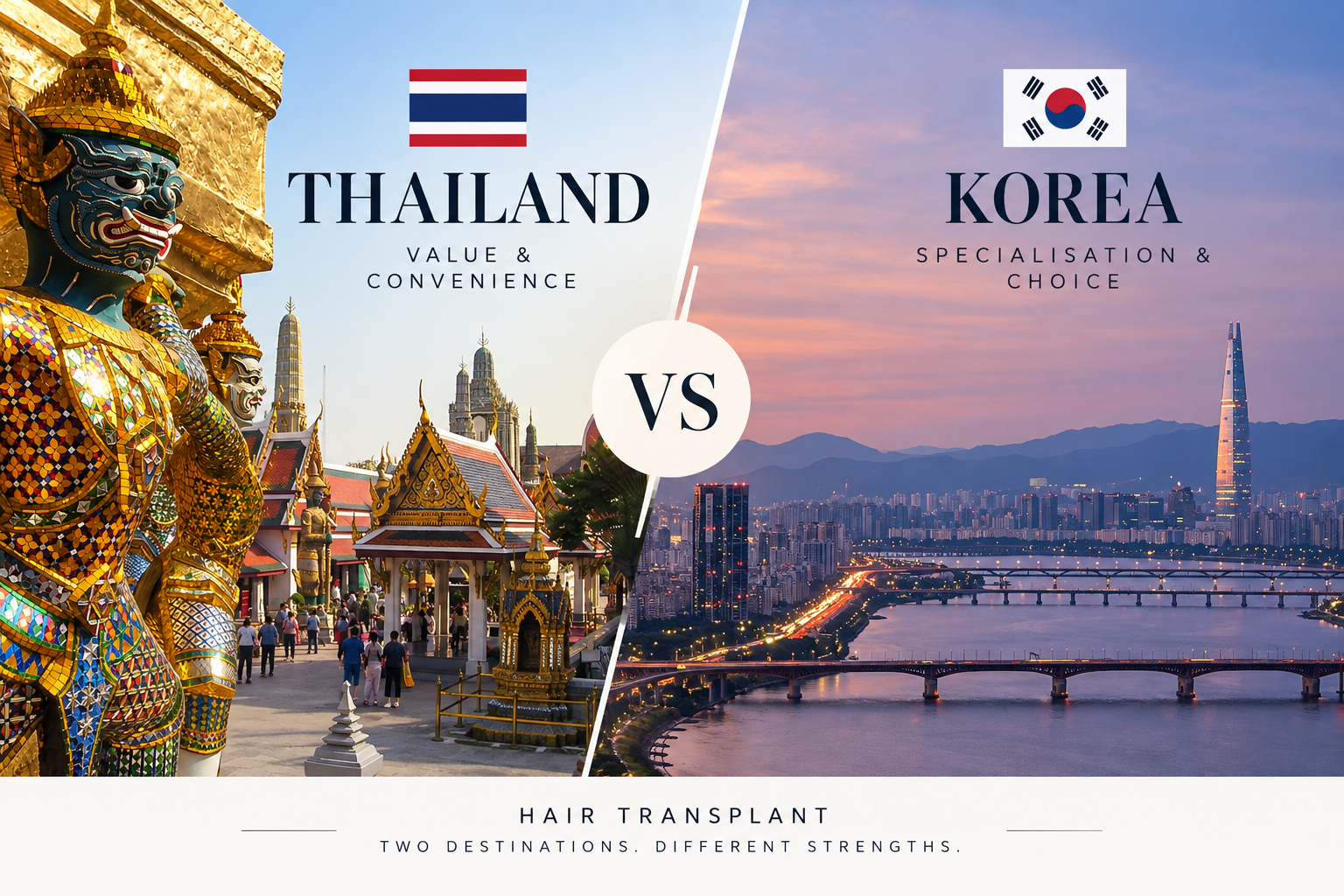
Thailand and Korea both have clinics that treat international patients. Each country has a wide range of clinics, and the differences between clinics usually matter more than the destination.
This guide lists the points worth comparing.
Check who examines you, who designs the hairline and who performs the incisions and extraction. The ISHRS advises patients to make sure the doctor they book is the one performing the surgery.
Ask which methods the clinic offers (FUE, FUT or both) and whether line-cut or non-shaven FUE is available if you want to keep your hair longer. These options usually cost more and suit smaller sessions. See FUE vs FUT.
Compare quotes for the same graft count and method, and add flights, accommodation and time off work. Prices in Thailand are often lower; for Korea, see our cost guide.
The wider checklist for comparing countries is in hair transplant abroad.
Depending on where you live, one destination may be much closer. Shorter travel can make the first days after surgery easier.
Ask how the clinic follows up, whether you can send progress photos and what happens if you need care at home. The US CDC advises making sure follow-up care is available before travelling abroad for treatment.
Aftercare timing is covered in hair transplant recovery.
This guide is general information, not medical advice. Whether a treatment suits you, and how many grafts you need, is decided by a doctor after examining your scalp. KAN HAIR is a coordination service, not a clinic.
This guide is general information, not medical advice. KAN HAIR is a coordination service operated by Hills Advisory Korea, a registered foreign patient facilitator in Korea. We are not a clinic: a doctor at the clinic examines you and decides whether a treatment is suitable.