



If you’re considering a hair transplant in Korea from Singapore, one of the first questions is usually the cost.
As you research different clinics, you’ll often see prices based on 1,500 grafts, 2,000 grafts or 3,000 grafts.
So, how much does a 2,000-graft hair transplant actually cost in Korea?
There isn’t one fixed answer.
Even for the same 2,000 grafts, prices can vary depending on the type of clinic, its area of expertise and the surgical approach used.
Among KAN HAIR’s partner clinics in Seoul, the options can broadly be grouped into three categories:
Rather than ranking individual clinics, this article looks at actual 2,000-graft quotations from KAN HAIR’s partner clinics to explain what you can expect at different price points in Korea.

In hair transplantation, a graft does not mean a single hair.
One graft is a naturally occurring follicular unit that may contain one, two or more hairs. This means that 2,000 grafts and 2,000 hairs are not the same thing.
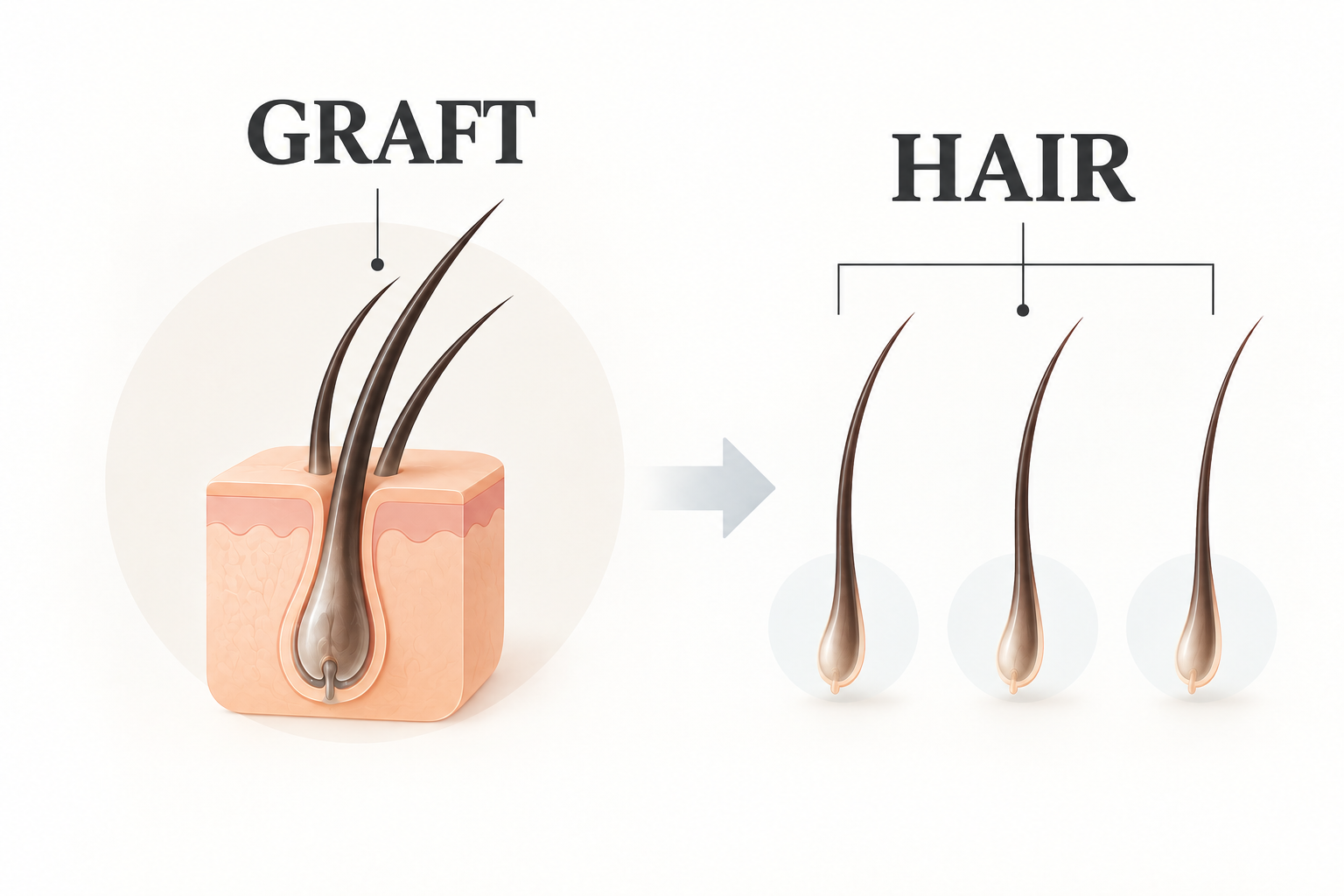
The number of grafts you need depends on factors such as the size of the area being treated, your existing hair density and the hairline you want to achieve.
And 2,000 grafts are not necessarily used in the same way for every patient.
They may be concentrated around the hairline and M-shaped recession, or distributed more broadly across the frontal area.
So even with the same graft count, the surgical plan can look very different depending on where the grafts are placed and how much density is required in each area.
This is why comparing the cost of 2,000 grafts is useful — but the number alone does not tell the whole story.
Hair transplantation in Korea is performed by several different types of medical clinics.
Some are larger plastic surgery clinics offering hair transplantation alongside other cosmetic procedures.
Others focus primarily or exclusively on hair restoration.
There are also clinics that handle more technically demanding procedures, such as body hair transplantation (BHT) and long-hair transplantation.
These differences affect how clinics are structured, the procedures they offer and ultimately how they price their treatments.
It would therefore be misleading to think of the market simply as:
Cheaper clinic = lower quality
More expensive clinic = higher quality
A more useful question is:
What does this clinic specialise in, and does my case actually require that level of specialisation?

The first category is a general plastic surgery clinic that performs hair transplantation alongside a wider range of cosmetic procedures.
One of the main advantages of this type of clinic is price competitiveness.
Because these clinics operate on a different scale and structure from dedicated hair transplant centres, they may be able to offer a 2,000-graft procedure at a relatively accessible price.
Hairline and M-shaped restoration are also commonly performed procedures, making this category relevant for patients looking for a relatively straightforward frontal transplant.
This applies to both men with frontal or M-shaped recession and women considering hairline correction.
For patients who do not require a specialised harvesting technique or a particularly complex procedure, a general plastic surgery clinic can therefore be a reasonable option to compare.
This type of clinic may suit you if:

The second category consists of clinics focused primarily on hair transplantation.
These clinics routinely treat different areas and patterns of hair loss, including the hairline, M-shaped recession, frontal thinning and the crown.
Their consultation, hairline design, graft extraction, implantation and postoperative care systems are typically built around hair transplantation as a core part of the practice.
Prices may be higher than at a general plastic surgery clinic, but usually remain below those of clinics offering more complex or specialised transplant techniques.
Hair transplantation is not simply a matter of moving a predetermined number of grafts.
A surgical plan may also need to consider the extent and progression of hair loss, the condition of the donor area and how much donor hair may be needed in the future.
For patients who do not want to choose a clinic based on price alone, but also do not necessarily require the most specialised procedures available, a dedicated hair transplant clinic can offer a practical middle ground.
This type of clinic may suit you if:
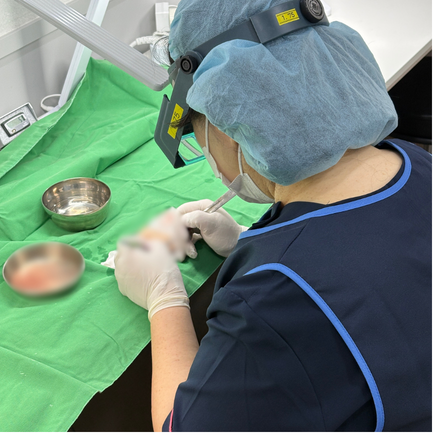
The third category includes clinics that perform standard scalp hair transplantation while also offering more technically demanding procedures, such as body hair transplantation (BHT) and long-hair transplantation.
These clinics tend to sit at the higher end of the price range.
With conventional FUE, donor hair is usually trimmed before individual follicular units are extracted. Long-hair techniques, by contrast, allow the hair to remain long during extraction and transplantation, making the procedure more technically involved.
Body hair transplantation also requires a different approach from conventional scalp-to-scalp transplantation, as hair from other parts of the body can have different characteristics from scalp hair.
Procedures that require additional surgical time, technical complexity or specialised expertise can therefore have a different pricing structure from a standard hair transplant.
However, a clinic capable of performing more advanced procedures is not automatically necessary for every patient.
If you are planning a straightforward M-shaped or frontal hairline transplant, you may not need any of these specialised techniques.
The question is not simply whether a clinic can perform advanced procedures, but whether your particular case actually requires them.
This type of clinic may suit you if:
Using actual quotations from KAN HAIR’s partner clinics, the three clinic categories compare as follows:
The key point is that there is no single price for 2,000 grafts in Korea.
But the difference in price should not automatically be interpreted as a difference in quality.
Someone seeking a standard frontal hair transplant and someone requiring body hair transplantation are looking for very different things from a clinic.
Rather than starting with the most expensive or cheapest option, it can be more useful to consider what your procedure actually requires.
A general plastic surgery clinic may be worth comparing if you are planning a relatively standard hairline or M-shaped transplant and do not require a specialised technique.
This category can make particular sense for patients whose main reason for considering Korea is the potential cost difference.
A hair transplant specialist clinic may be a better fit if you place more value on a practice focused specifically on hair restoration.
This can provide a middle ground between affordability and specialisation.
An advanced or specialised transplant clinic becomes more relevant when techniques such as body hair transplantation or long-hair transplantation are part of the surgical plan.
The fact that these techniques are available, however, does not mean every patient needs them.
In our previous review of publicly listed hair transplant prices in Singapore, we found advertised rates ranging from approximately S$4 to S$10 per graft.
For a simple country-to-country comparison, we used the midpoint of that range — S$7 per graft — as a benchmark, rather than presenting it as the average price of hair transplantation in Singapore.
Using that benchmark:
2,000 grafts × S$7 = S$14,000
This does not mean that every 2,000-graft hair transplant in Singapore costs S$14,000.
Actual quotations vary by clinic, procedure and pricing structure. The S$7 figure is simply a benchmark that allows the same graft count to be compared on a consistent basis.
Compared with Korea, however, there is another layer to consider.
As the three categories above show, the price of 2,000 grafts within Korea itself can vary substantially depending on the type of clinic you choose.
So instead of asking only:
Singapore or Korea — which is cheaper?
a more useful question may be:
What type of Korean clinic does my procedure actually require, and what does 2,000 grafts cost at that level?
There is one final point that matters more than the price of 2,000 grafts:
whether you actually need 2,000 grafts in the first place.
Two people with an M-shaped hairline can require very different graft counts depending on how far the hairline has receded, the density of their existing hair and how much they want to change the shape or position of the hairline.
Donor hair is also finite.
Using more grafts does not automatically mean a better transplant, particularly when future hair loss may require additional treatment later.
The number of grafts should therefore be planned around the area that needs to be restored today while also considering the possibility of future hair loss.
When comparing hair transplant costs in Korea, the most useful starting point is not necessarily finding the cheapest or most expensive clinic.
It is understanding how many grafts you are likely to need, what type of procedure your case requires, and which type of clinic is appropriate for that plan.