



You have been taking finasteride for months, but your hairline still seems to be receding.
Or perhaps you have been treating male pattern hair loss for almost a year and are wondering why you have not seen the improvement you expected.
If this sounds familiar, it does not necessarily mean that your treatment has failed.
Finasteride and dutasteride are widely used for androgenetic alopecia (AGA), also known as male pattern hair loss.
However, these medications do not produce the same results for everyone — and their main role is not simply to regrow hair that has already disappeared.
Here are three reasons why hair loss may still appear to progress despite treatment, and what options may be considered next.

To understand why results vary, it helps to understand what these medications are designed to do.
AGA is strongly associated with dihydrotestosterone (DHT), a hormone produced from testosterone through an enzyme called 5-alpha reductase.
Finasteride and dutasteride reduce the production of DHT by inhibiting this enzyme.
In simple terms:
Less DHT → Less pressure on DHT-sensitive hair follicles → Slower progression of AGA
This means that successful treatment does not always result in dramatic new hair growth.
For some people, maintaining the hair they currently have and slowing further loss may itself be an important treatment outcome.
This distinction is particularly important when evaluating whether medication is actually “working”.
AGA does not progress at the same rate in everyone.
Some men experience only mild recession of the hairline, while others develop noticeable thinning across the frontal or crown areas at a relatively young age.
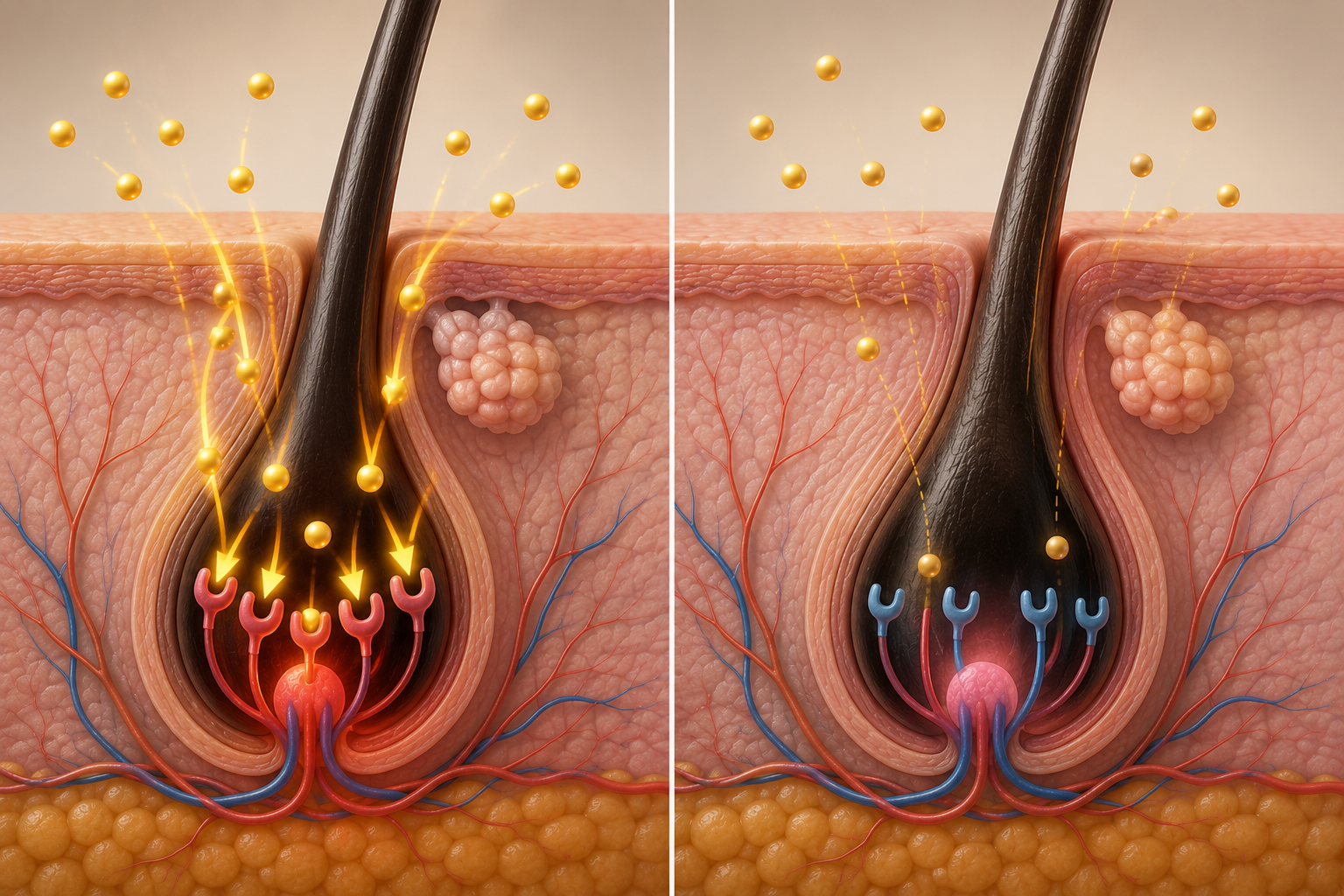
One reason is that individual hair follicles can respond differently to androgen signals.
Hair follicles contain androgen receptors that respond to DHT.
Genetic differences may influence how sensitive these follicles are to androgen activity.
Think of these receptors as antennas receiving a DHT signal.
Medication can reduce the amount of DHT available, but individual biological differences may still influence the overall response to treatment.
This is one reason why two people taking the same medication for the same period of time may experience different results.
Another important factor is how much functional hair remains in the affected area.
AGA usually progresses gradually.
A thick terminal hair may become:
Thick hair → Thinner and shorter hair → Miniaturised hair → Barely visible hair
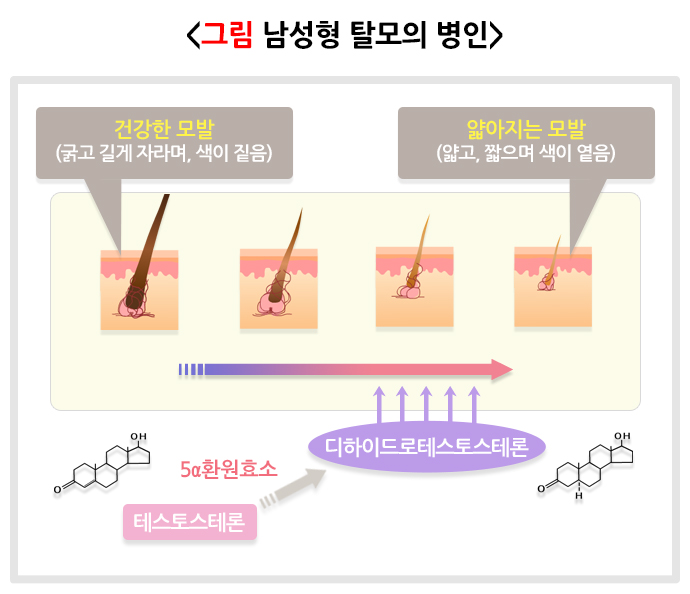
Medication can be particularly valuable while follicles are still producing hair because its role includes helping to slow further miniaturisation.
However, when an area has been significantly affected for a long time, medication alone may not be able to recreate the density or hairline that existed years earlier.
This is particularly relevant when:
In these situations, it may not simply be a question of whether finasteride “worked”.
The expectations for what medication alone can realistically achieve may need to be reconsidered.
Not every case of hair shedding is caused exclusively by androgenetic alopecia.
Other medical, hormonal, nutritional or physiological factors can sometimes affect the hair growth cycle as well.
Therefore, if significant shedding continues despite long-term AGA treatment, simply increasing the dose or changing medication without medical advice may not address the underlying issue.
A medical assessment can help determine whether AGA is the main cause or whether another condition may also be contributing.
Finasteride and dutasteride work in similar ways, but they are not identical.
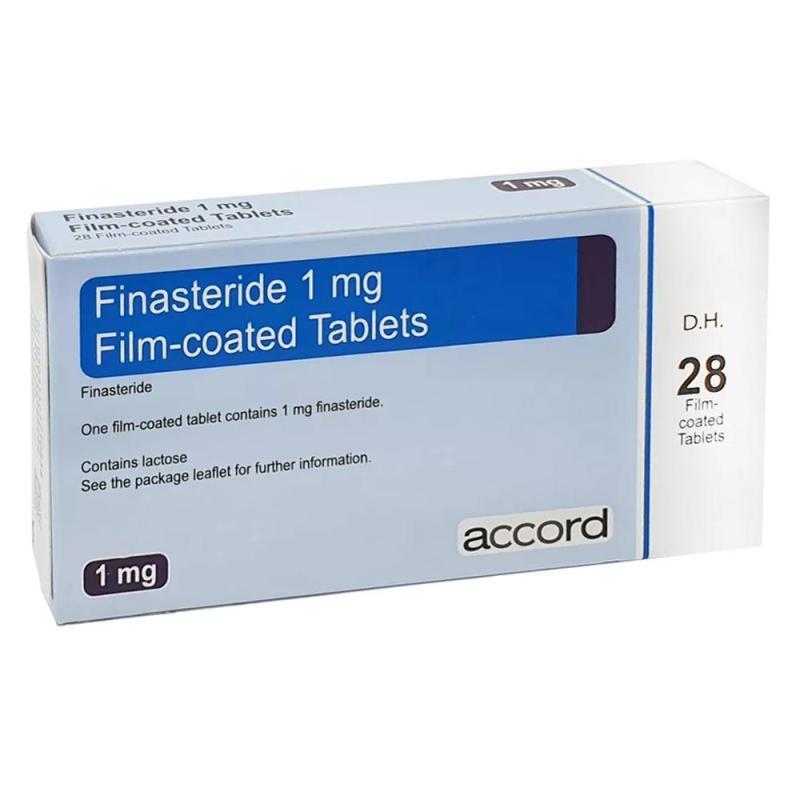
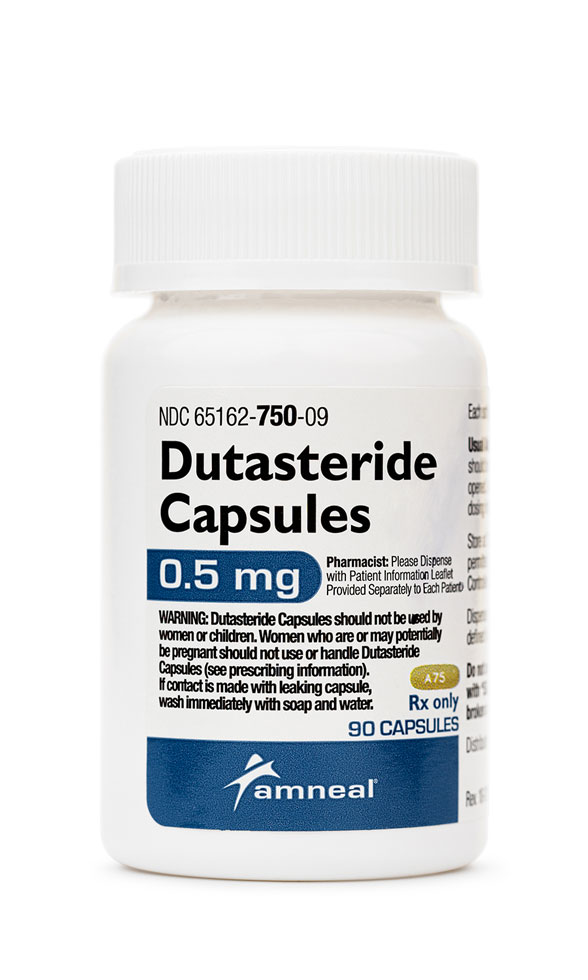
Finasteride primarily inhibits type II 5-alpha reductase, while dutasteride inhibits both type I and type II.
For some patients, a doctor may therefore consider changing treatment depending on the individual response and clinical situation.
However, switching medication does not automatically solve every case of continued hair loss.
If the affected area is already significantly advanced, or other factors are contributing to hair loss, simply changing medication may not provide the visual improvement a patient expects.
Any change in medication should therefore be discussed with a qualified doctor rather than made independently.
Hair treatment requires patience.
It can be frustrating to take medication for three or six months without seeing dramatic changes in the mirror, but hair grows slowly and AGA treatment is generally evaluated over time.
It is also important to remember that regrowth is not the only measure of success.
Imagine that without treatment your hairline would have continued to recede, but treatment helped maintain its current position.
You may not see a dramatic before-and-after transformation, but slowing further progression can still be clinically meaningful.
This is where it becomes important to separate two different goals.
Helps protect existing hair and slow the progression of androgenetic alopecia.
Redistributes your own hair follicles to areas where visible hair has already been lost.
They serve different purposes.
.png)
For areas where hair follicles have already been significantly lost, a hair transplant may be considered as one option for restoring visible coverage.
This is one reason some patients use medical treatment to help preserve their existing hair while using transplantation to address areas where significant recession has already occurred.
A common misconception is that having a hair transplant means AGA medication is no longer relevant.
A transplant can restore hair to selected areas, but it does not stop androgenetic alopecia from progressing in the surrounding non-transplanted hair.
For appropriate patients, the overall strategy may therefore involve:
Medical treatment → Protect existing hair
Hair transplantation → Restore selected areas of previous hair loss
The appropriate approach depends on the individual pattern of hair loss, donor hair condition, age, medical history and treatment goals.
Medication should not be stopped or changed without discussing it with a doctor.
For patients in Singapore who have been managing AGA for some time but are still concerned about a receding hairline or areas where hair has already been lost, a hair transplant in Korea may be one option to explore.
The important question is not simply:
“Is my medication working?”
It is also:
“What am I trying to achieve?”
If the priority is preventing further hair loss, medical treatment may continue to play an important role.
If the goal is to restore an already receded hairline or improve visible coverage in areas where substantial hair has been lost, transplantation may be worth discussing with a specialist.
Understanding the different roles of AGA medication and hair transplantation can make it easier to choose a treatment strategy based on your current condition rather than expecting one treatment to solve every aspect of hair loss.
This article is for general educational purposes and does not replace medical diagnosis or advice. Finasteride, dutasteride and other hair-loss medications should be used under appropriate medical supervision.