


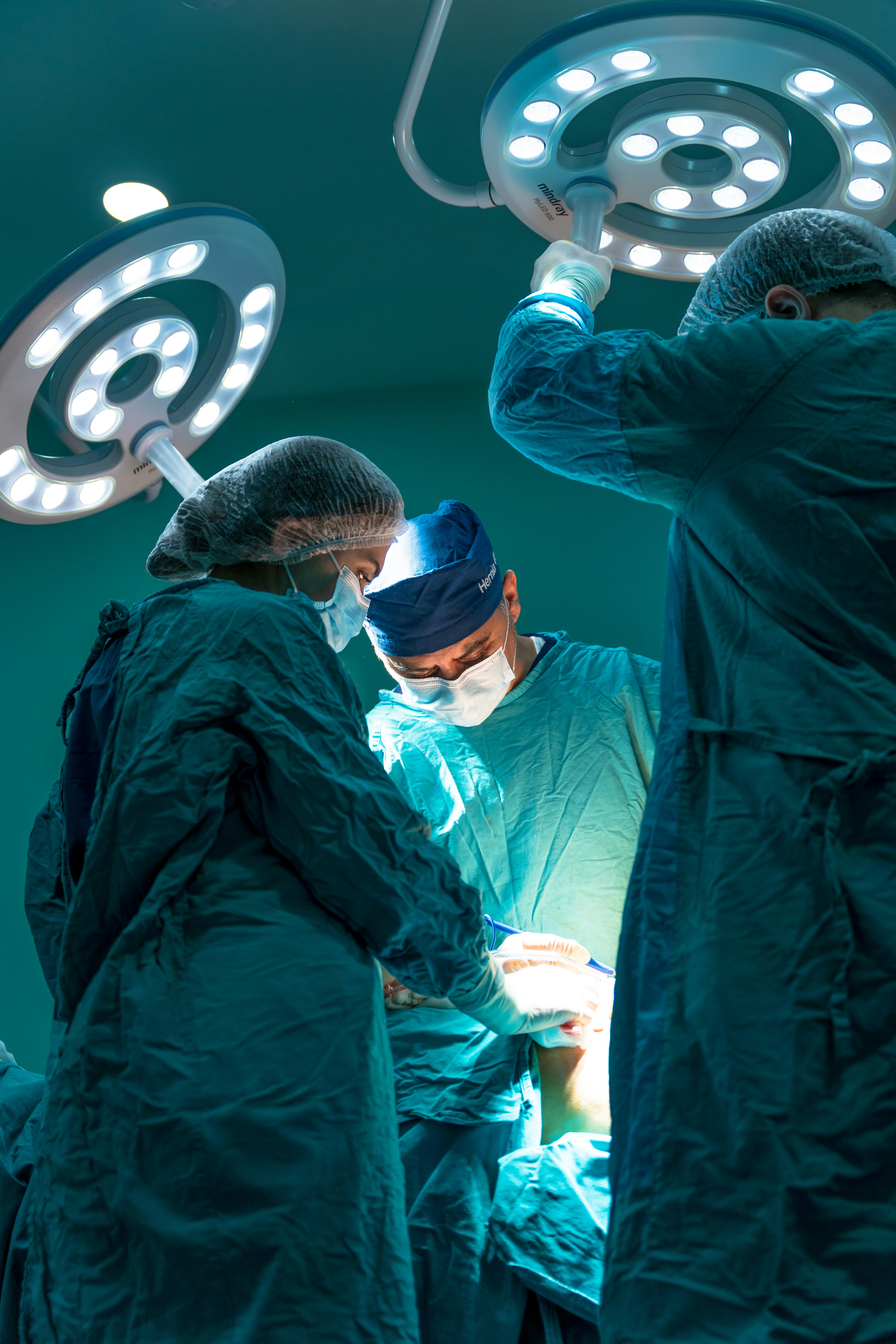
FUE and FUT are two established hair transplant techniques, but they differ in how hair follicles are harvested from the donor area.
FUE removes individual follicular units and leaves small, scattered scars. FUT removes a narrow strip of donor scalp and leaves a linear scar.
So, is FUE or FUT better?
FUE may be more suitable if you want to avoid a linear scar, prefer shorter hairstyles or prioritise donor-area recovery.
FUT may be worth considering if you want to avoid shaving a wide donor area, keep the surgical area concealed under longer hair or need a carefully planned larger graft session.
Neither technique is automatically better for graft survival or long-term results.
For patients travelling from Singapore to Korea, the decision should also consider how visible the donor area will be after surgery, whether stitches require removal and how follow-up will be arranged after returning home.
This guide compares FUE and FUT side by side to help you understand which option may suit your hair-loss condition, lifestyle and treatment priorities.

FUE stands for Follicular Unit Excision. It is also widely known as Follicular Unit Extraction.
During FUE, individual follicular units are removed directly from the donor area, usually at the back and sides of the scalp, using a small punch device. The harvested follicles are then prepared and transplanted into the areas affected by hair loss.
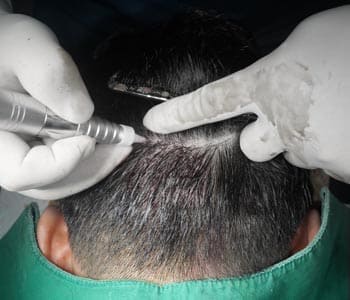
Because FUE does not involve removing a long strip of scalp, it does not leave the linear scar associated with FUT. However, FUE should not be described as completely scarless. Each extraction creates a small circular wound that may heal into a tiny dot-like mark.
When the grafts are harvested evenly and conservatively, these marks are generally dispersed across the donor area and can be difficult to notice. If too many follicles are removed from a limited area, however, the donor region may appear thin, uneven or patchy.
Standard FUE usually requires the donor area to be shaved so that the medical team can identify the direction of each follicle and extract it accurately.
Depending on the clinic and the patient’s condition, other options may include:
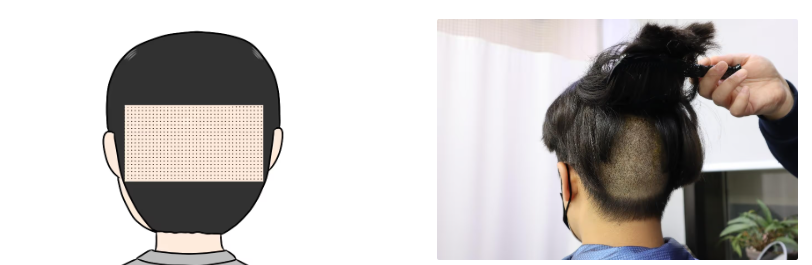
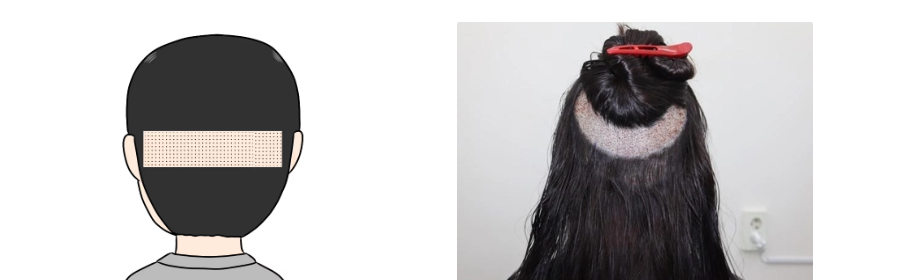
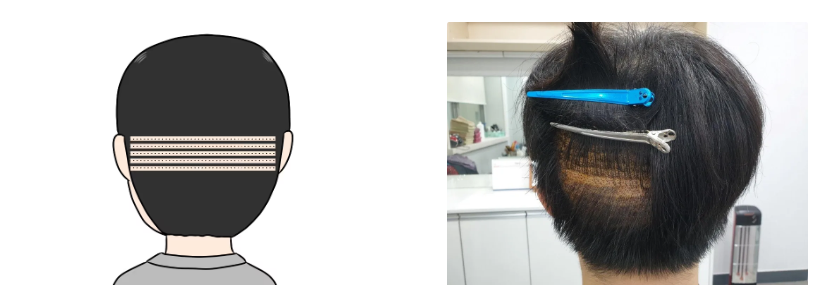
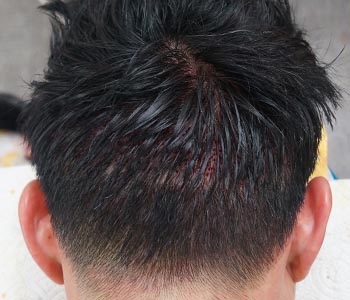
These approaches may reduce the visible extent of shaving, but they can require more time and technical precision. They may also cost more than standard shaved FUE.
Non-shaven FUE is not necessarily suitable for every patient. The available options depend on the number of grafts required, donor density, hair length and the clinic’s experience with the technique.
FUT stands for Follicular Unit Transplantation.
During FUT, the surgeon removes a narrow strip of hair-bearing scalp from the donor area. The incision is then closed using sutures or staples, and the strip is carefully divided into individual follicular-unit grafts for transplantation.
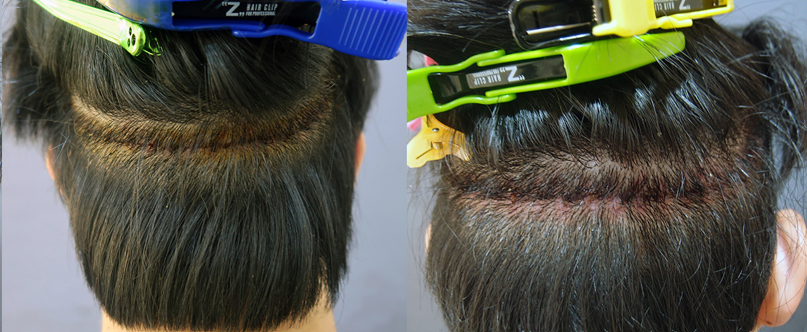
Because a section of tissue is removed at one time, FUT can be an efficient way to obtain a relatively large number of grafts.
FUT also usually avoids the need to shave a wide donor area. The hair surrounding the incision can often be left long enough to cover the sutured area immediately after surgery.
For this reason, FUT may actually be less noticeable during the early postoperative period for patients who do not want an obvious shaved section at the back of the head.
Its principal trade-off is that it leaves a linear scar. The appearance and width of that scar may vary according to the surgical technique, scalp tension, wound healing and the patient’s individual scarring tendency.
FUE can provide greater flexibility for short hairstyles after healing.
However, excessive extraction may cause visible donor thinning, and standard FUE generally requires shaving.
FUT can be an efficient harvesting option and may be easier to conceal immediately after surgery. However, it leaves a linear scar and requires incision healing.
The better technique depends on your donor condition and long-term treatment plan, not simply your preferred harvesting method.
No hair transplant harvesting method is completely scarless.
FUE replaces one long linear scar with many small circular scars. When the extraction pattern is evenly distributed, these small marks are often difficult to see.
However, removing too many follicles from one area can lead to:
Published medical literature identifies overharvesting as an important potential complication of FUE because it can permanently thin or damage the donor area.
A responsible FUE plan must therefore consider how the donor area will look after healing—not simply how many grafts can be removed in one session.
FUT also produces a scar, but its scar is concentrated along one line. Its final width may be affected by scalp laxity, closure technique, tension and individual healing characteristics.
In both methods, the surgeon’s donor-management strategy is as important as the name of the procedure.
FUT has traditionally been used for efficiently obtaining larger graft numbers from a defined strip of donor scalp.
Modern FUE can also support larger sessions, but safe harvesting capacity depends on donor density, hair characteristics, previous procedures and the need to preserve hair for future treatment.
Neither method guarantees a higher graft count for every patient.
For extensive hair loss, the surgeon may recommend FUE, FUT or a combination of both as part of a long-term donor management plan.
Neither FUE nor FUT can be considered universally superior in graft survival.
Both techniques can produce successful results when performed appropriately.
Outcomes depend on factors such as follicle damage during harvesting, graft handling, implantation technique, the surgeon's experience and individual scalp conditions.
Rather than choosing a technique based on advertised survival rates alone, patients should compare the clinic's surgical approach, donor management and graft-handling procedures.
Because FUE does not involve a long incision or sutures, patients often experience less tightness in the donor area.
Small crusts form at the extraction points and gradually fall away as the skin heals. The shaved hair will also need time to grow sufficiently to conceal the extraction area.
Although recovery is often faster, temporary redness, tenderness, itching, swelling or numbness can still occur. FUE remains a surgical procedure and is not free of potential complications.
After FUT, patients may feel tightness, soreness or reduced sensation around the incision. Sutures or staples may also need to be removed according to the clinic’s instructions.
The surrounding hair can usually cover the surgical area, making FUT less obvious immediately after surgery. However, patients must allow the incision to heal and avoid activities that place unnecessary tension on the wound.
For Singapore patients returning home after surgery in Korea, the best method cannot be selected based only on the flight schedule. The condition of the donor area, postoperative check-up requirements and the clinic’s instructions should take priority.
Hair transplant recovery in Singapore→
For Singapore patients, the decision between FUE and FUT involves more than the surgical technique itself.
If you are planning a short trip to Korea, it is important to consider the appearance of the donor area immediately after surgery and the follow-up care required after returning home.
Before booking, confirm:
A typical trip to Korea for a hair transplant may take approximately 2 nights and 3 days, but the procedure and follow-up requirements should be confirmed before booking flights.
KAN HAIR helps patients compare selected Korean partner clinics, their available FUE and FUT options and relevant treatment arrangements before booking.
After treatment, patients can send progress photos and clinic-related questions through WhatsApp for up to one year.
Medical advice and treatment decisions remain the responsibility of the treating clinic.
FUT was an established and widely used method during the earlier development of modern hair transplantation in Korea.
As individual follicular-unit harvesting technology improved and demand increased for procedures without a linear scar, FUE became an increasingly common choice. Today, Korean hair transplant clinics may offer standard shaved FUE, partial-shave FUE, line-cut methods, non-shaven FUE and FUT.
This does not mean that FUE is always the more advanced or appropriate option.
A responsible clinic should recommend a harvesting method based on:
The latest or most heavily advertised procedure is not necessarily the best procedure for a particular patient.
Neither technique is universally better.
FUE usually requires some degree of donor shaving and can make the back of the head visibly thinner if too many follicles are removed.
FUT requires an incision and leaves a linear scar, but that scar may remain covered when the hair is worn at an appropriate length.
The choice should be based on your donor area and long-term treatment plan rather than on which method appears newer.
Before deciding between FUE and FUT, the surgeon should assess:
A hair transplant permanently redistributes a limited supply of donor hair. The first procedure should therefore be planned with future hair loss in mind.
Neither is universally better.
FUE may be preferable for patients who want to avoid a linear scar or wear shorter hairstyles, while FUT may suit patients who want to minimise donor-area shaving or require larger graft sessions.
The best option depends on your donor condition and long-term treatment plan.
FUE creates multiple small scars distributed across the donor area, while FUT leaves a linear scar.
Visibility depends on your hairstyle, donor density, surgical technique and healing.
Standard FUE usually requires shaving the donor area.
However, selected Korean clinics offer partial-shave, line-cut and non-shaven FUE options, depending on the patient's condition and graft requirement.
Donor-area recovery is often faster after FUE because there is no long strip incision.
FUT requires incision healing and may involve suture or staple removal. Recovery varies by patient and procedure.
Many patients plan a short trip to Korea for hair transplantation, but the return date should be approved by the treating clinic.
FUT patients should also confirm whether stitches require removal and how this will be arranged after returning to Singapore.
FUE may be worth considering if you want to avoid a linear scar, prefer shorter hairstyles or prioritise donor-area recovery.
FUT may be suitable if you want to avoid shaving a wide donor area, prefer to conceal the surgical area under longer hair or need a carefully planned larger graft session.
However, the best approach depends on your donor density, required graft count, scalp condition and potential future hair loss.
Before deciding between FUE and FUT, start by understanding your own graft requirement and donor condition.
Singapore vs Korea hair transplant cost comparison→
KAN HAIR can help you compare suitable Korean partner clinics, available harvesting methods and indicative treatment costs before you travel from Singapore.
Send us photos of your hairline, thinning area and donor area through WhatsApp to begin a free photo assessment.
Medical References