


Singapore is widely recognised for its strong healthcare infrastructure, strict medical regulations and high standards of patient care.
However, hair transplant procedures in Singapore are also among the more expensive options in Asia.
After receiving a local quotation, some patients postpone surgery because the total cost is higher than expected.
Others begin comparing clinics in nearby medical tourism destinations such as South Korea and Thailand.
Since the total price of a hair transplant usually increases with the number of grafts required, the difference between countries can become significant for procedures involving 2,000 grafts or more.
So, once airfare, accommodation and local support are included, is it still more economical to undergo a hair transplant in South Korea?
According to a hair transplant cost guide published by GLOJAS, hair transplant prices in Singapore may range from approximately S$3 to S$12 per graft, depending on the clinic, surgeon and procedure.
The following price ranges are commonly presented:
Prices may also vary depending on the implantation method. FUE procedures are often quoted at around S$5 to S$10 per graft, while DHI may cost approximately S$6 to S$12 per graft. Robotic hair transplant procedures may be priced at S$8 to S$12 per graft or higher.
These figures should not be treated as an official national average for every clinic in Singapore.
Actual costs depend on the surgeon, clinic, number of grafts, complexity of the procedure and services included in the quotation.
Nevertheless, the data illustrates that Singapore generally belongs to the higher-priced segment of the global hair transplant market.
It would be inaccurate to describe South Korea as a purely low-cost hair transplant destination.
In GLOJAS’s international comparison, hair transplant procedures in South Korea are estimated at approximately S$6,000 to S$20,000 or more, while Singapore is estimated at around S$5,000 to S$25,000 or more.
This suggests that the price ranges of the two countries overlap. A procedure in South Korea will therefore not automatically be at least 30% cheaper in every case.
Both countries are better understood as premium markets that place importance on medical technology, patient safety and cosmetic outcomes.
However, South Korea may offer stronger cost advantages in certain situations, including:
South Korea has a large number of specialised clinics across different price ranges, giving patients more options even for procedures of a similar size.
When comparing the overall cost of a hair transplant in South Korea, it is important to consider more than the surgery fee.
Patients travelling from Singapore may also need to budget for:
For smaller procedures, the difference between the total cost in Singapore and South Korea may become relatively limited once travel expenses are added.
However, when 2,000 to 3,000 grafts or more are required, or when comparing South Korean clinics with higher-priced Singapore providers, undergoing surgery in Korea may still be more economical even after flights and accommodation are included.
The most accurate way to compare costs is to calculate:
Surgery fee in South Korea
This total should then be compared with a final Singapore quotation based on the same number of grafts and the same surgical method.
One of the defining features of the South Korean hair transplant market is the high level of competition among specialised clinics.
![숫자로 읽는 서울] '성형외과 성지'는 역시 강남…다른 의원들도 몰렸다 - 헤럴드경제](https://cdn.prod.website-files.com/66803be741d23e75f9788185/6a57336f481519a67ce0f857_20180112000455_0.jpeg)
Seoul, particularly the Gangnam area, is home to more than 500 aesthetic medical clinics. A number of these clinics specialise in hair transplantation and hair-loss treatment.
This concentration of medical providers has encouraged competition not only in pricing, but also in surgical techniques, design, patient service and postoperative care.
Clinics in South Korea commonly differentiate themselves through areas such as:
As a result, patients may compare clinics according to their own priorities rather than choosing based on price alone.
At the same time, a large number of options also means that patients must carefully distinguish established medical providers from unverified clinics or unusually low-priced packages.
It is important to confirm the operating surgeon, medical team, case experience and aftercare system before making a decision.
Singapore also has experienced doctors and a highly regulated medical system.
One area in which South Korea has developed a particularly strong reputation is aesthetic hairline design.
Hairline transplantation in Korea often considers more than simply covering an area of hair loss. The design may take into account:
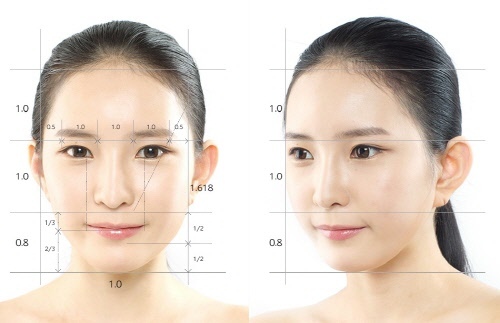
A 1:1:1 proportion between the upper, middle and lower parts of the face is often used as a general reference.
For some Asian facial structures, a proportion of approximately 1:1:0.8, in which the lower face appears slightly shorter, may be used to create a more balanced and three-dimensional impression.
This ratio is not a fixed formula that should be applied to everyone.
A successful hairline design should be adjusted to the individual’s existing facial structure, forehead shape and hair characteristics.
International comparison sources also highlight South Korea’s experience in detailed hairline design, graft direction and DHI-based implantation techniques.
The outcome of a hair transplant is not determined only by the number of grafts implanted.
Graft survival depends on the entire process, from extraction to implantation.
Important factors include:
Many leading hair transplant clinics in South Korea aim for graft survival rates of 95% or higher through careful follicle preservation and postoperative management.
However, graft survival varies between patients and medical institutions.
It should not be understood as an absolute guaranteed result. Rather than relying only on a percentage stated by a clinic, patients should examine how the clinic extracts, stores and implants grafts, as well as how it manages postoperative recovery.
Undergoing surgery in Singapore also offers several clear advantages:
For patients who require regular face-to-face monitoring, have complex medical conditions or feel uncomfortable about travelling abroad for surgery, Singapore may be the more suitable choice.
South Korea may be more attractive to patients who prioritise cost, natural hairline design, a broad range of clinics and surgical options, and who are comfortable travelling overseas.
Undergoing surgery overseas involves more than simply booking a clinic.
Even when the medical standard is high, the overall experience can be negatively affected if consultation details are not communicated accurately or if patients are unable to explain postoperative symptoms after returning home.
Before booking, patients should confirm whether the following support is available:
KAN HAIR operates in accordance with South Korea’s regulations for international patient support and works with partner clinics that hold KAHF certification.
For patients travelling from Singapore, KAN HAIR provides English interpretation, local transportation, surgical-day assistance and postoperative coordination, helping reduce the language and logistical burden of undergoing treatment overseas.
Singapore and South Korea are both premium hair transplant markets that place importance on medical technology and cosmetic outcomes.
Singapore’s strengths include strict regulation, convenient local follow-up and the ability to recover at home.
South Korea’s advantages include a wider choice of specialised clinics, extensive experience in hairline design, multiple surgical methods and potentially lower overall costs.
For patients requiring a larger number of grafts or comparing premium Singapore clinics, the total cost in South Korea may remain lower even after airfare and accommodation are included.
However, it would be inaccurate to assume that treatment in Korea is always at least 30% cheaper for every patient.
A fair comparison should consider the same conditions in both countries, including:
Rather than choosing a country based only on price, patients should look for a medical team and support system that can use the limited donor area safely and create a natural result suited to their individual needs.