


.jpg)
Turkey is usually the cheaper option for a hair transplant, while Korea may be more suitable for patients who prioritise shorter travel from Singapore, individual treatment planning, doctor involvement and access to clinics experienced with East Asian hair.
For a 2,000-graft case, our current comparison estimates a total cost of around S$4,300 in Turkey versus S$9,380 in Korea, including estimated travel costs.
That price difference is significant.
But cost is not the only difference between the two markets.
Clinic structure, graft planning, shaving options, surgeon involvement, travel time and post-operative follow-up can also affect which destination is more suitable for you.
This guide compares Korea and Turkey side by side so you can decide which matters more for your case.

Most comparison articles skip this, and it makes their tables wrong.
![[황정욱의 탈모 백과사전] 튀르키예 모발이식, 한국 모발이식과 차이점은?](https://cdn.prod.website-files.com/66803be741d23e75f9788185/689c4f909880bdaa27ffdbce_202408010937351814_l.jpeg)
Turkish clinics rarely charge per graft.
The standard model is a fixed, all-inclusive package covering the procedure, hotel nights, airport transfers, a translator and an aftercare kit.
Graft count is often described as "unlimited" or given as a wide band rather than a firm number.
Korean and Singapore clinics charge per graft.
You are quoted a graft count before surgery, and the total moves with it.
Accommodation and transfers are separate.
Comparing cost per graft between the two is therefore comparing two different things.
The useful comparison is total cost for a comparable case.
Take a 2,000-graft case, a common size for frontal and mid-scalp restoration.
On procedure cost alone, and on total cost, Turkey wins.
Around S$4,300 all-in against roughly S$9,380 for Korea and S$14,000 in Singapore.
What that number does not show is what varies between the three columns:
how the graft count is set, who performs the surgery, what hair type the protocols were built around, and what happens if something needs looking at three months later.
Those are the next sections.
Planning around 2,000 grafts? See our [2,000 Grafts Hair Transplant Cost in Korea] breakdown for a comparison of different clinic price levels in Korea.
Some of the answer is straightforward economics. Some of it is worth understanding before you book.
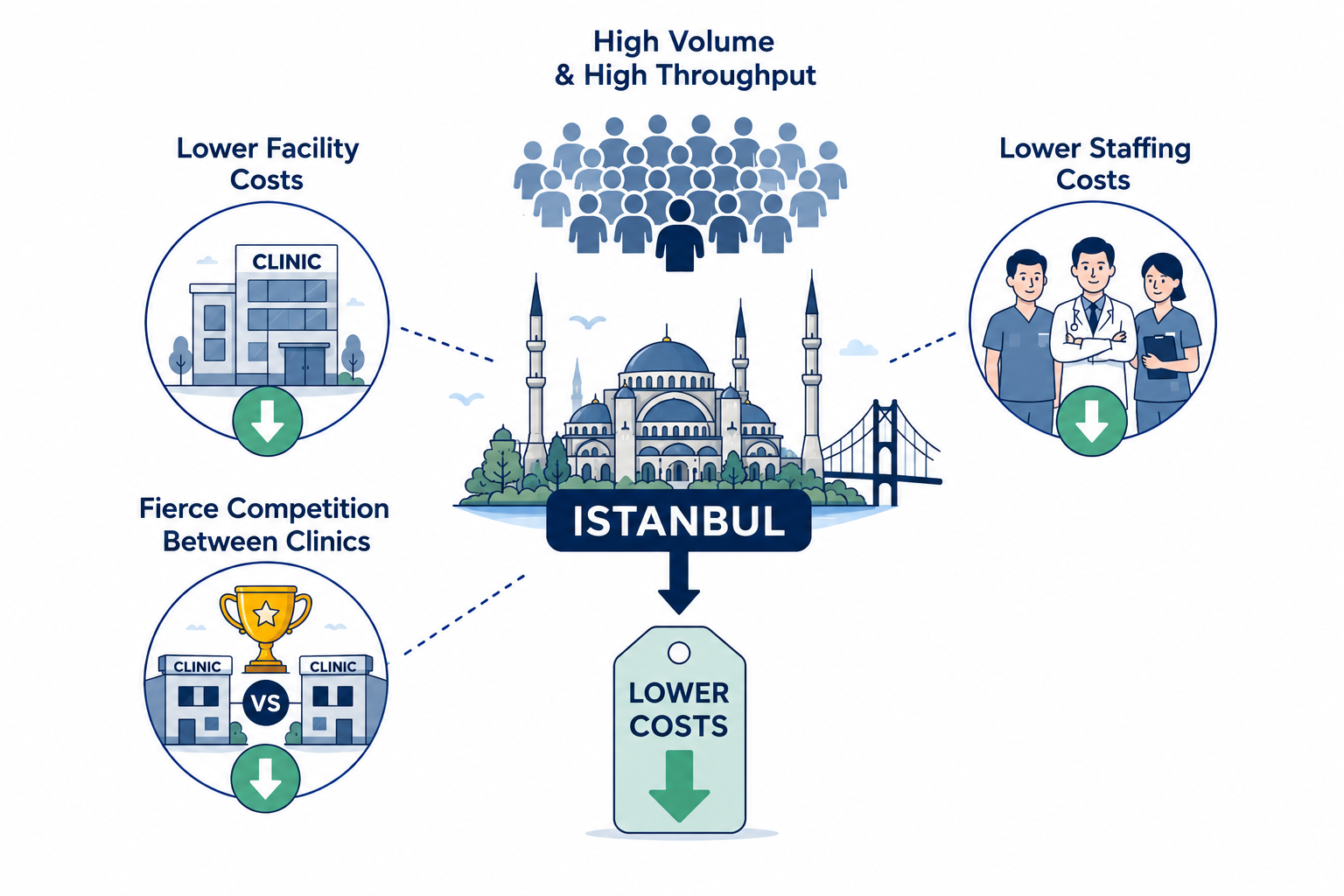
Istanbul is one of the world’s largest hair transplant markets.
High patient volumes, intense competition and lower operating costs allow many clinics to offer fixed packages at prices that are difficult for Korea or Singapore to match.
These packages often combine the procedure with accommodation, local transfers and other travel-related services, which can make the total price especially attractive to international patients.
Turkey’s package model can also make direct graft-by-graft comparisons more difficult.
Some packages advertise a wide graft range or use terms such as “unlimited grafts”, while others may refer to individual hairs rather than follicular-unit grafts.
Before comparing quotes, confirm:
For a fair comparison, make sure both quotes are based on the same graft definition.
See our Singapore vs Korea hair transplant cost comparison →

The country alone does not tell you who will perform each part of a hair transplant.
The division of work between doctors, nurses and trained clinical staff can vary significantly from one clinic to another.
Before choosing any clinic, it is worth asking who is responsible for:
KAN HAIR partner clinics operate under physician-led treatment models, although the exact division of each surgical stage differs by clinic.
When comparing Korean clinics through KAN HAIR, we can explain how each clinic structures the procedure so you can compare more than price and graft count alone.
This is where the two markets genuinely diverge, and it has nothing to do with price.
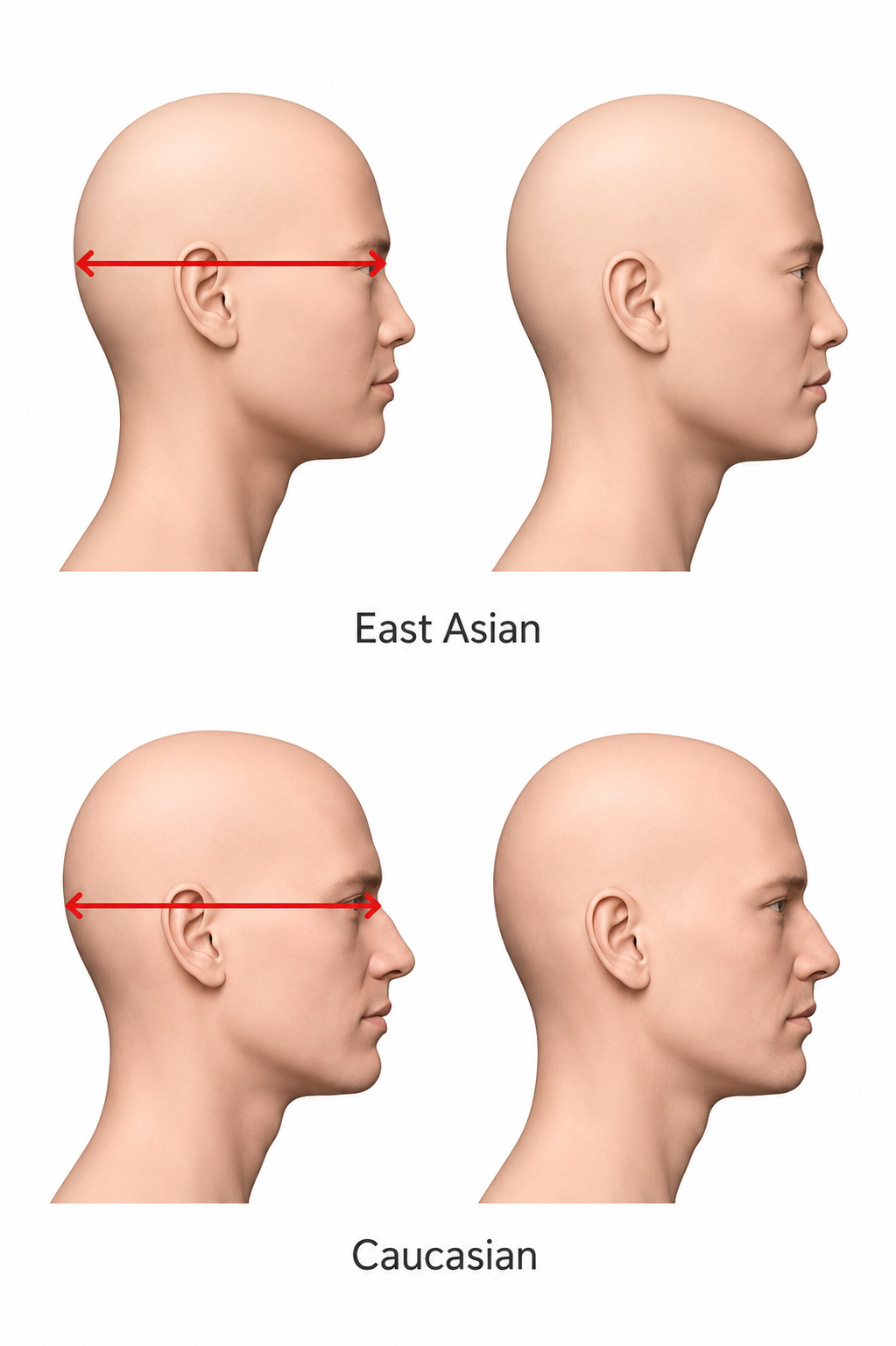
Korean hair transplant clinics naturally treat a large number of East Asian patients.
This can be relevant because hair thickness, follicle shape, density, growth direction and preferred hairline design vary between individuals and ethnic backgrounds.
For Singapore patients, the important question is not whether Korea is automatically “better”, but whether the clinic has substantial experience with patients whose hair characteristics and hair-loss pattern resemble your own.
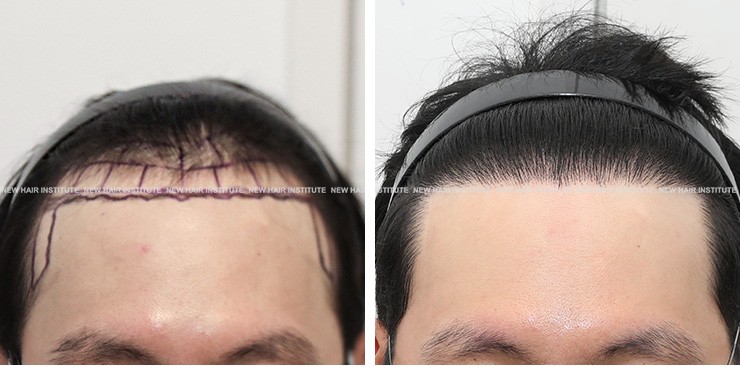
These considerations apply most directly to Chinese-Singaporean patients.
Malay and Indian patients frequently have different follicle curl, density and scalp characteristics, which affect both extraction technique and hairline design.
Any clinic worth choosing should assess your specific hair type rather than apply a template. Ask about this directly at consultation, wherever you go.
Korean clinics have converged on a few practices that follow from the above:
For Singapore patients, this is one of Korea’s clearest practical advantages.
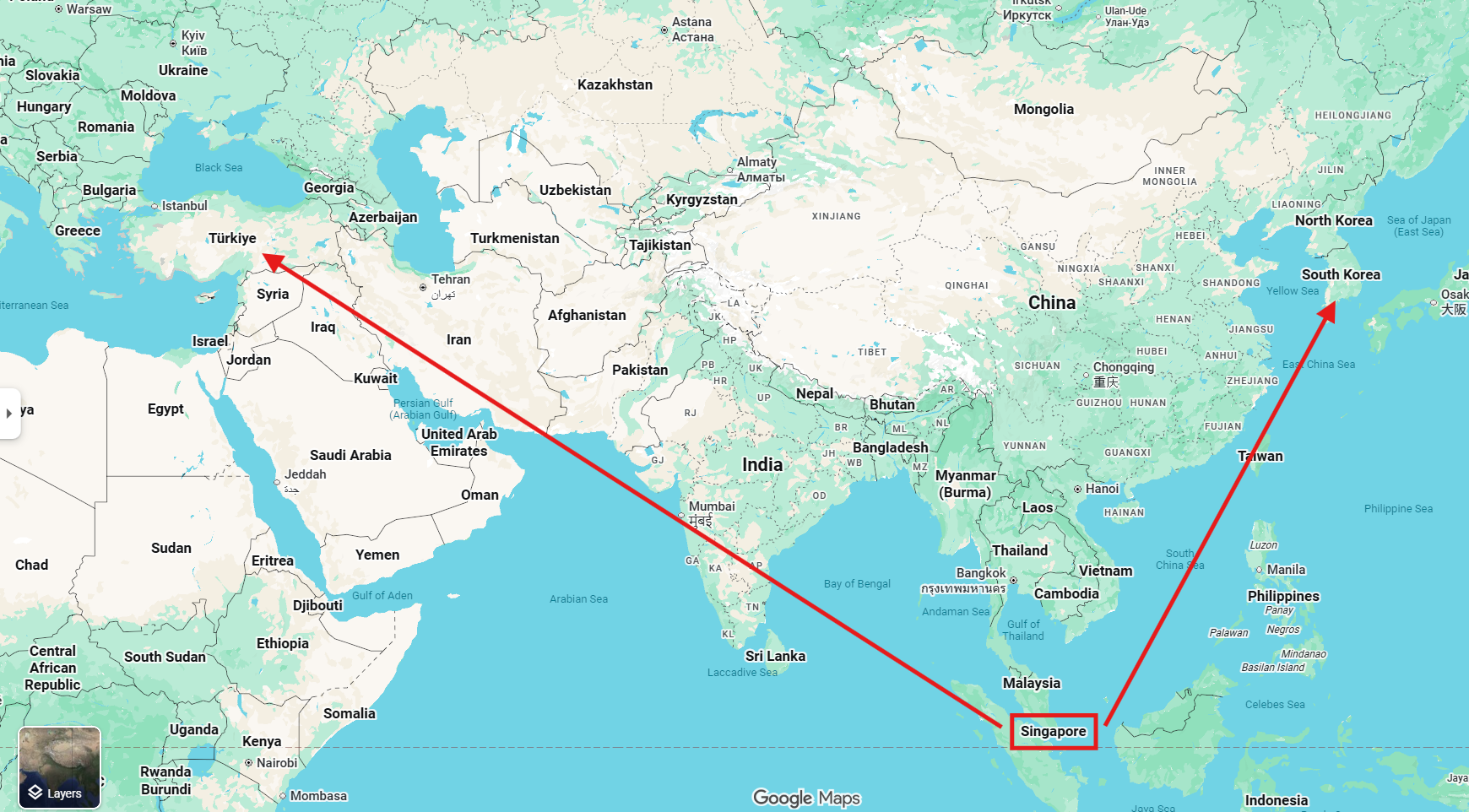
Seoul is significantly closer, with only a one-hour time difference, making both the initial trip and any future in-person review easier.
The flight matters more than it sounds.
You fly home within a day or two of surgery, with a scalp that cannot be knocked, scratched or pressed against a headrest, in dry cabin air, while grafts are still fragile.
That makes the length of the flight matter more, not less.
Eleven and a half hours of that, with a five-hour time shift on each side, is a materially different recovery from six and a half hours in nearly the same time zone.
Follow-up is the other consideration. Most patients need nothing more than photo-based review during the first year, which works from anywhere.
But if something does need to be seen in person — a slow-healing donor area, an unexpected reaction — distance decides whether that is a long weekend or an impossibility.
Hair transplant recovery follows broadly similar biological stages regardless of the country.
For Singapore patients, the more practical difference is the journey home and how easily follow-up can be arranged after returning.
Singapore’s heat and humidity also require some additional care during the early recovery period, particularly around sweating, exercise and sun exposure.
Read our Hair Transplant Recovery in Singapore guide →
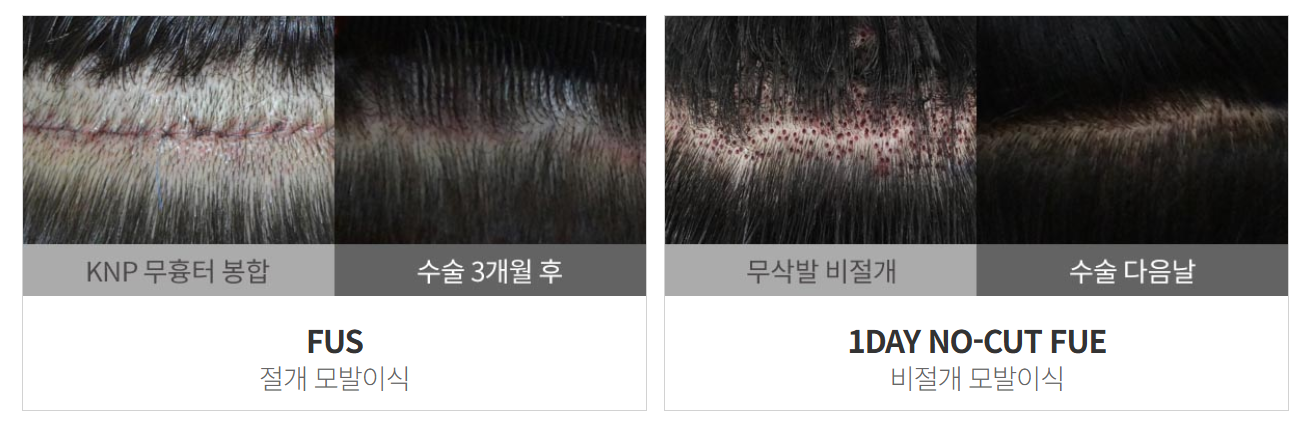
Both Korea and Turkey offer FUE, while FUT availability varies by clinic.
The better harvesting method depends more on your donor area, required graft count, hairstyle and treatment priorities than on whether you choose Korea or Turkey.
Read our full FUE vs FUT Hair Transplant Guide →
Your main priority is keeping the total cost as low as possible, and you prefer the convenience of an all-inclusive package that may combine surgery, accommodation and local transfers.
For patients who are comfortable with the longer journey from Singapore, Turkey remains one of the most price-competitive hair transplant destinations.
You are willing to pay more for shorter travel from Singapore and want to compare multiple physician-led clinics, different shaving options and treatment approaches before choosing where to have surgery.
Korea may also be more practical if you value easier communication with your clinic after returning home and the option of travelling back for an in-person review if ever required.
A country-level price comparison can only take you so far.
The more useful question is how many grafts you need, which technique suits your donor area and which clinic model fits your priorities.
Send KAN HAIR photos of your hairline, top/crown and donor area. We can estimate your graft range and show you suitable Korean clinic options before you book any travel.
Free Photo Assessment on WhatsApp →
There is no single better choice for everyone.
Turkey is generally more attractive for patients whose main priority is lower cost and all-inclusive package convenience.
Korea may be more suitable for patients who value shorter travel from Singapore, individual clinic selection, physician-led treatment planning and easier follow-up after returning home.
The better option ultimately depends on your budget, hair-loss pattern, donor condition, preferred technique and the individual clinic you choose.
In general, Turkey is cheaper than Korea for hair transplantation.
In the 2,000-graft example used in this comparison, the estimated total including travel is approximately S$4,300 in Turkey and S$9,380 in Korea.
However, actual costs vary depending on the clinic, number of grafts, surgical technique, package inclusions and travel dates.
For patients choosing Korea, the decision is therefore often based on more than price alone, including clinic selection, treatment approach, travel distance and follow-up access.
Turkish clinics commonly advertise international hair transplant packages in the range of approximately US$2,000–5,000, although prices and inclusions vary significantly between providers.
In Korea, pricing is more commonly based on the individual case, graft requirement, clinic and surgical technique.
For the 2,000-graft example used in this guide, the estimated procedure and travel total is approximately:
Turkey: S$4,300
Korea: S$9,380
These figures are examples rather than fixed market prices, so it is important to compare quotes based on the same graft count and treatment conditions.
This depends on the individual clinic rather than the country alone.
Before choosing a clinic, it is important to ask who is responsible for the hairline design, graft extraction, recipient-site creation and implantation.
KAN HAIR partner clinics in Korea operate under physician-led treatment models, although the exact division of each surgical stage differs by clinic.
When comparing Korean clinics through KAN HAIR, we can explain how each clinic structures the procedure so you can compare more than price alone.
Most patients travelling from Singapore can plan for approximately 2–3 nights in Korea, depending on the clinic and treatment schedule.
A typical trip may include arrival before the procedure, surgery the following day and clinic-specific post-operative care before returning to Singapore.
Exact schedules vary by clinic, so your treatment dates should be confirmed before booking flights.
Yes.
After returning to Singapore, you can continue to send progress photos and clinic-related questions to KAN HAIR through WhatsApp for up to one year.
If further confirmation is needed, KAN HAIR can contact the clinic on your behalf.
For many patients, follow-up can be managed remotely through photos and communication with the clinic.
Not necessarily.
Depending on the clinic and your individual case, Korean clinics may offer options including Standard Shaved FUE, Line-Cut FUE and Non-Shaven FUE.
The most suitable option depends on your required graft count, donor condition, hairstyle and budget.
KAN HAIR can help you compare clinics offering different shaving and harvesting methods before you travel.
The number of grafts required depends on the size of the thinning area, existing hair density, donor condition and the density you want to achieve.
Rather than choosing Korea or Turkey based only on advertised package prices, it is better to first estimate your own graft requirement.
You can send KAN HAIR photos of your hairline, temples, top or crown and donor area through WhatsApp.
We can review your case and help compare suitable Korean clinic options and indicative pricing before you book your trip.